Dirk Habenschaden, July 2026
No Commission, No Promise. Just the Question of Space.
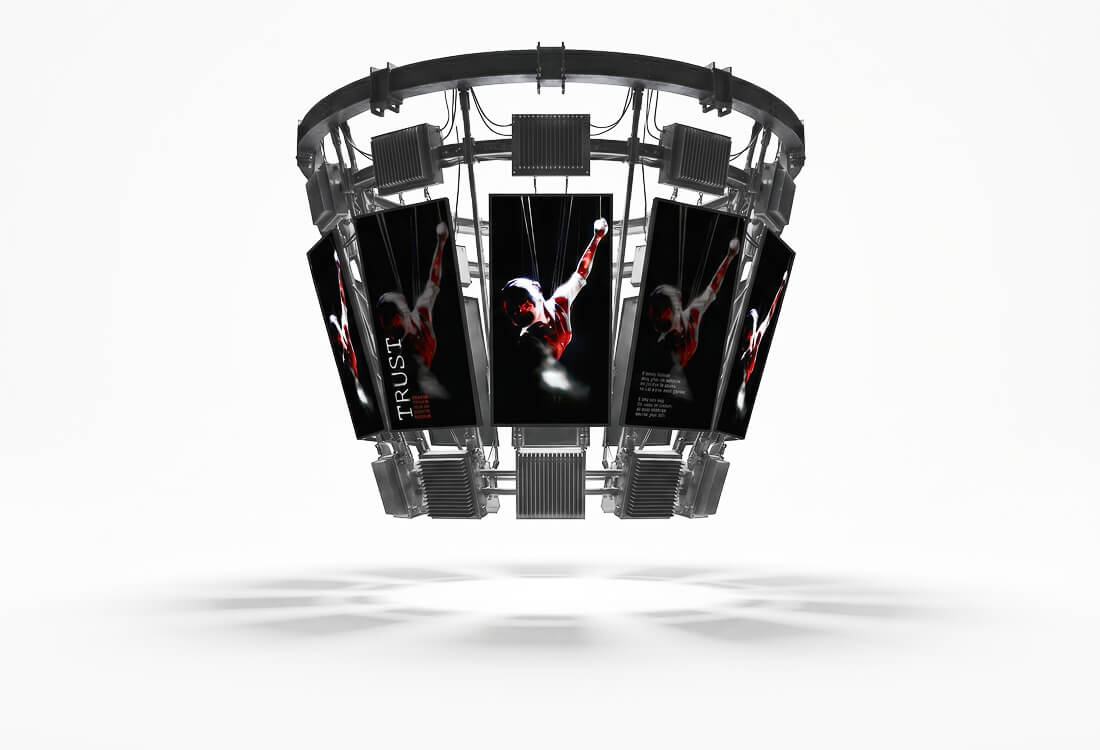
I remember the moment I first wrote down what I imagined: eight displays, arranged in a circle. A darkened room. The audience outside, the figures inside.
No commission behind it. No commitment. Just the question: if this work were to exist in a space — in which one?
That is the difference between a concept and a work. And it is larger than I had long thought.
From Warden to Witness: The Inverted Panopticon
Jeremy Bentham designed the Panopticon as an architecture of surveillance. One sees all. Power lies in the gaze.
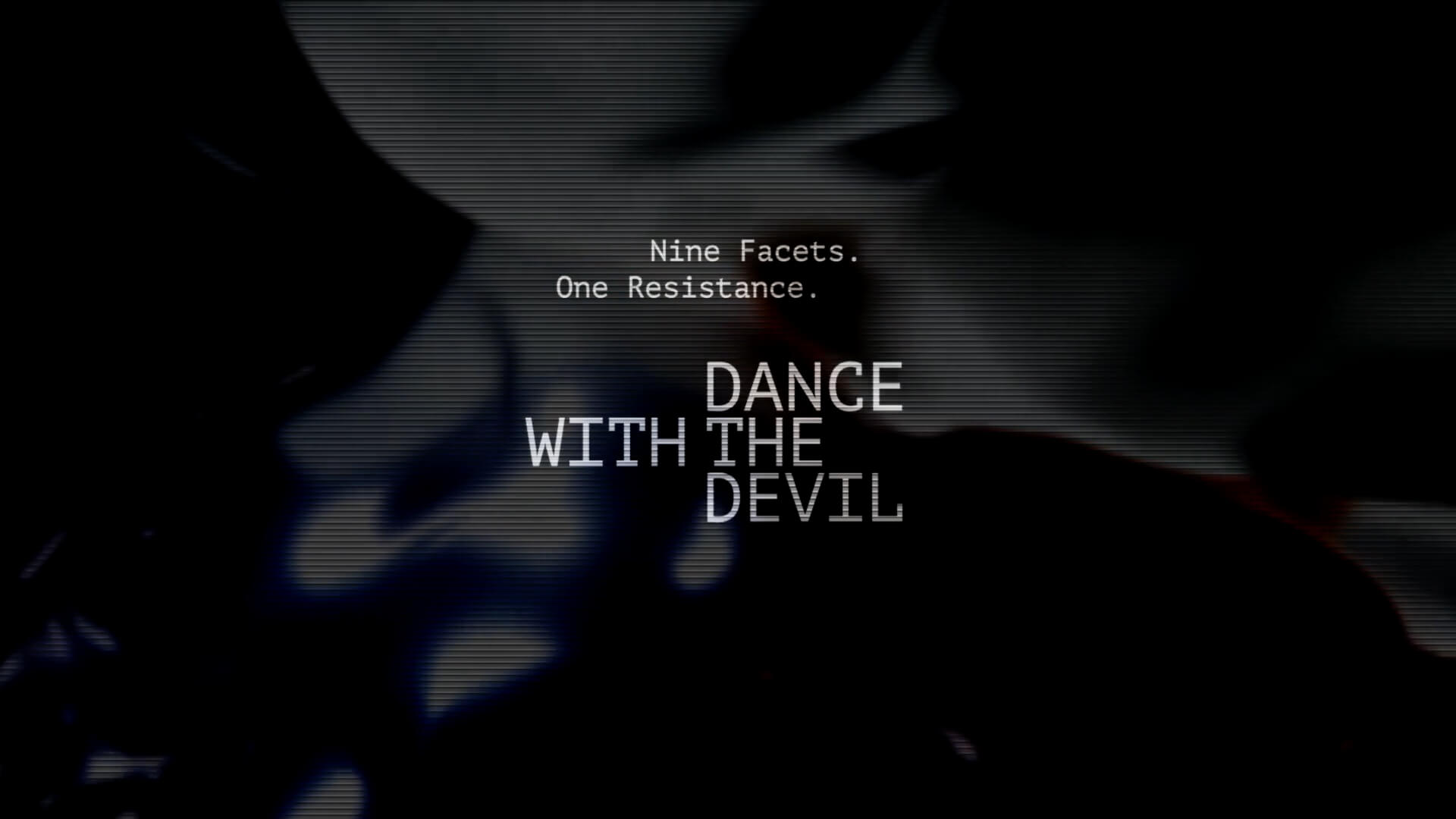
The Algorithmic Panopticon — the spatial installation for Dance with the Devil — inverts this. The eight displays form a luminous core. Inside: glitching bodies, typographic code, nine facets of human existence in a state of algorithmic control. The audience moves outside. It observes. But it controls nothing.
Whoever looks here becomes a witness — not a warden.
That mattered to me. And it is why this work absolutely requires a physical space. A screen is not enough. A feed is not enough. The experience is the movement around the octahedron. The slow realization that one is positioned — peripheral, observing, not at the center.
The Robustness of the Idea: From Image to Specification
I developed the installation concept because I wanted to understand whether it holds. Whether the idea is robust enough to survive concreteness: how many displays. What rigging. What space. How much depth in the sound.
Writing an exhibition concept is itself a practice. It demands clarity. Things that work as images sometimes don't hold when you have to translate them into specifications. And sometimes — when you note meters, watts, and synchronization — something sharper than the original image suddenly emerges.
The concept is not a promise. It is an invitation to possibility.
What does it mean to do this in 2026?
Attention Instead of Rejection: The Signal of the Institutions
The institutional art world is moving. Slowly, tentatively, but it is moving. The BBA Artist Prize placed Poetry in Black and White on its longlist (see article Longlist Nomination). So did konsum > 163. Two juries, independently, evaluating AI-based work in a curatorial context.
That is not a free pass. But it is a signal: institutions are beginning to answer the question not with rejection, but with attention.
At the same time: whoever waits for an invitation may be waiting too long. The concept exists because I wrote it, not because anyone asked for it. Self-empowerment is the prerequisite for entering the conversation at all.
A proposal that does not yet exist cannot be rejected. But it cannot trigger anything either.