The CirclePrivate previews, studio notes, and priority access to new editions ahead of the public release.
Successfully registered for private previews.
The Grotesque 20ies
00
December 2019. The lights were glittering, the champagne was flowing. I stood at the Christmas party of the agency I was working for at the time, looking back on one of our best years. The team was perfect, the mood at its peak, the energy incredible. In that moment, all I could think was: 'Wow, the Roaring Twenties are just around the corner!' I was convinced the coming decade would be bombastic. We were ready to conquer the world.
But we all know what happened next.
Now, nearly five years after the first lockdown, I feel the need to artistically process this period and how I experienced it. A journey back into a grotesque reality.
In THE GROTESQUE 20IES, the aesthetic of Art Deco becomes a projection of the uncanny. Elegance does not protect against the grotesque; it lends it a disturbing form of normalcy. It is the visual dissection of an era in which the mask was no longer a mere accessory, but mutated into the new, expressionless skin of a society.
01
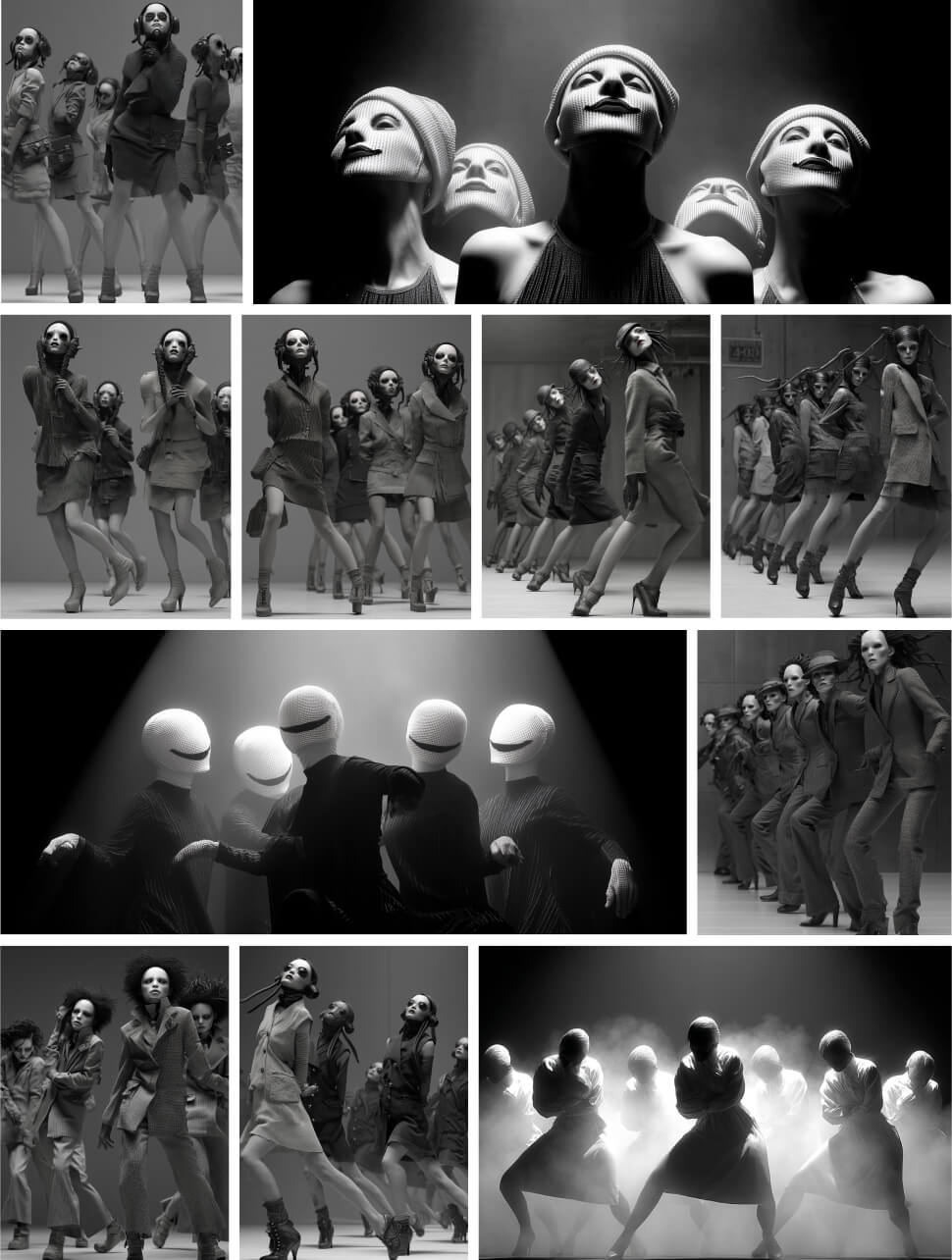
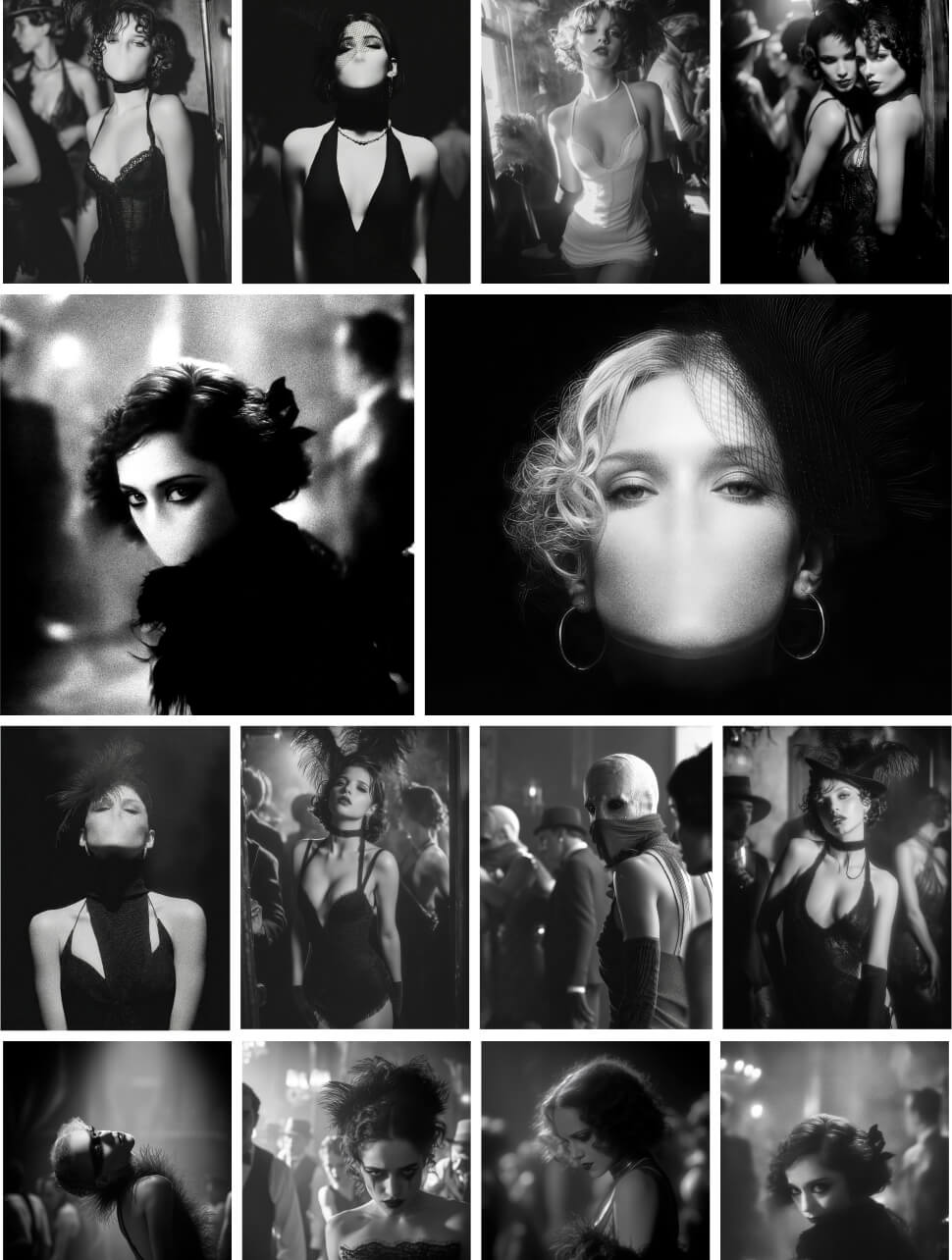
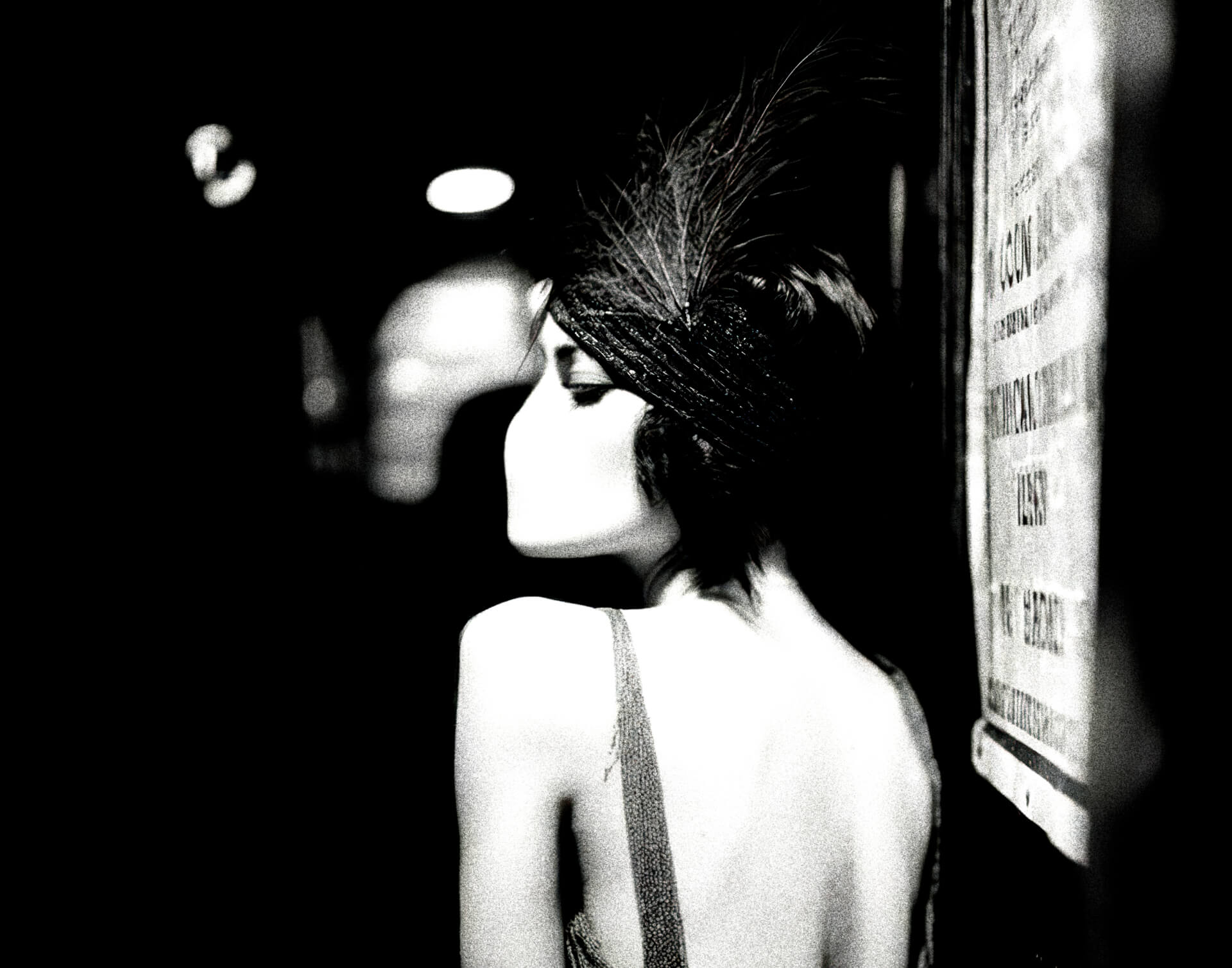
We expected a celebration, but we awoke in a masquerade. The rhythm of the 1920s is still there, but the faces have changed. Behind the pearls and pinstripes, the monsters emerged. A visual processing of a time that did not unfold as we had imagined.
The Twisted Masquerade functions as a sociological tableau. Behind the stylized facades of the 1920s, the series unmasks the creeping dehumanization of a society in a state of emergency.
The Twisted Masquerade.
02
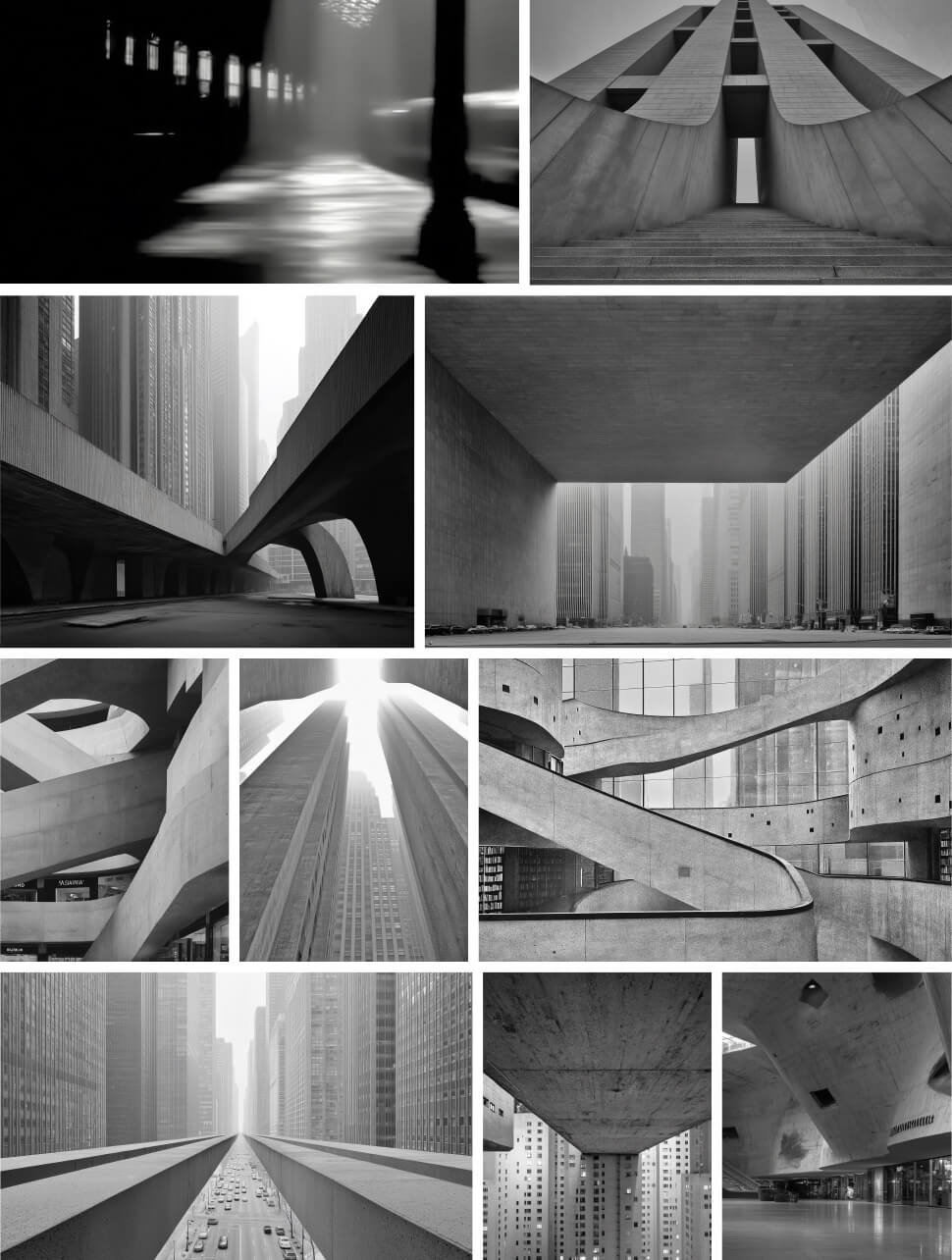
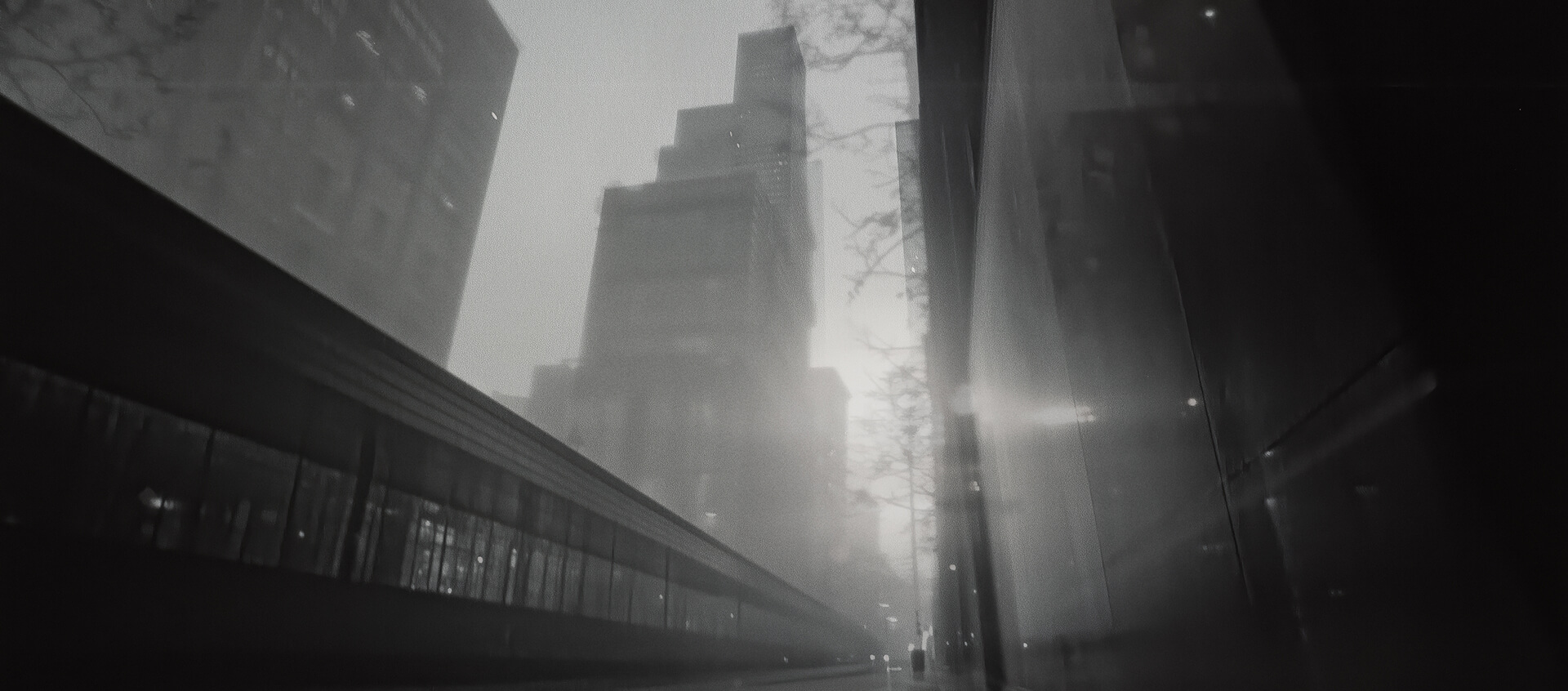
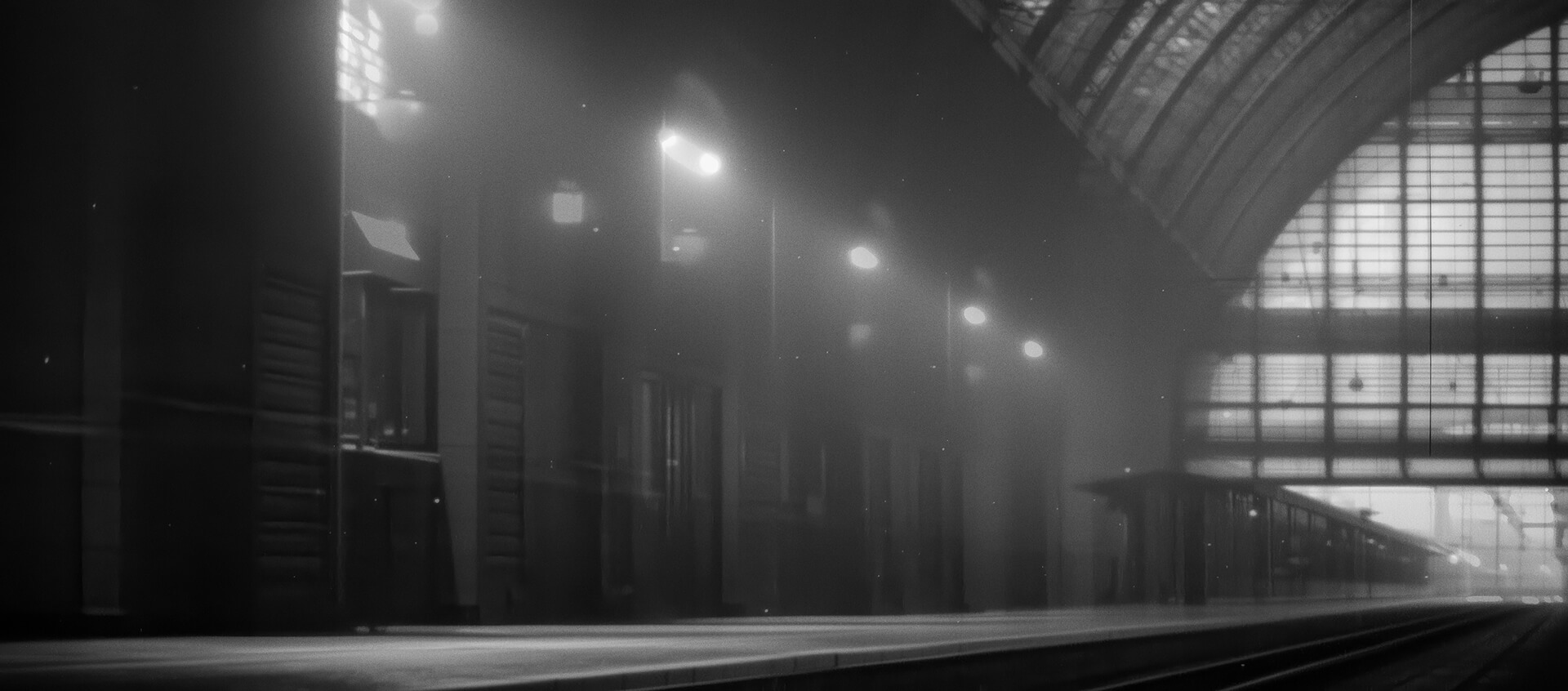
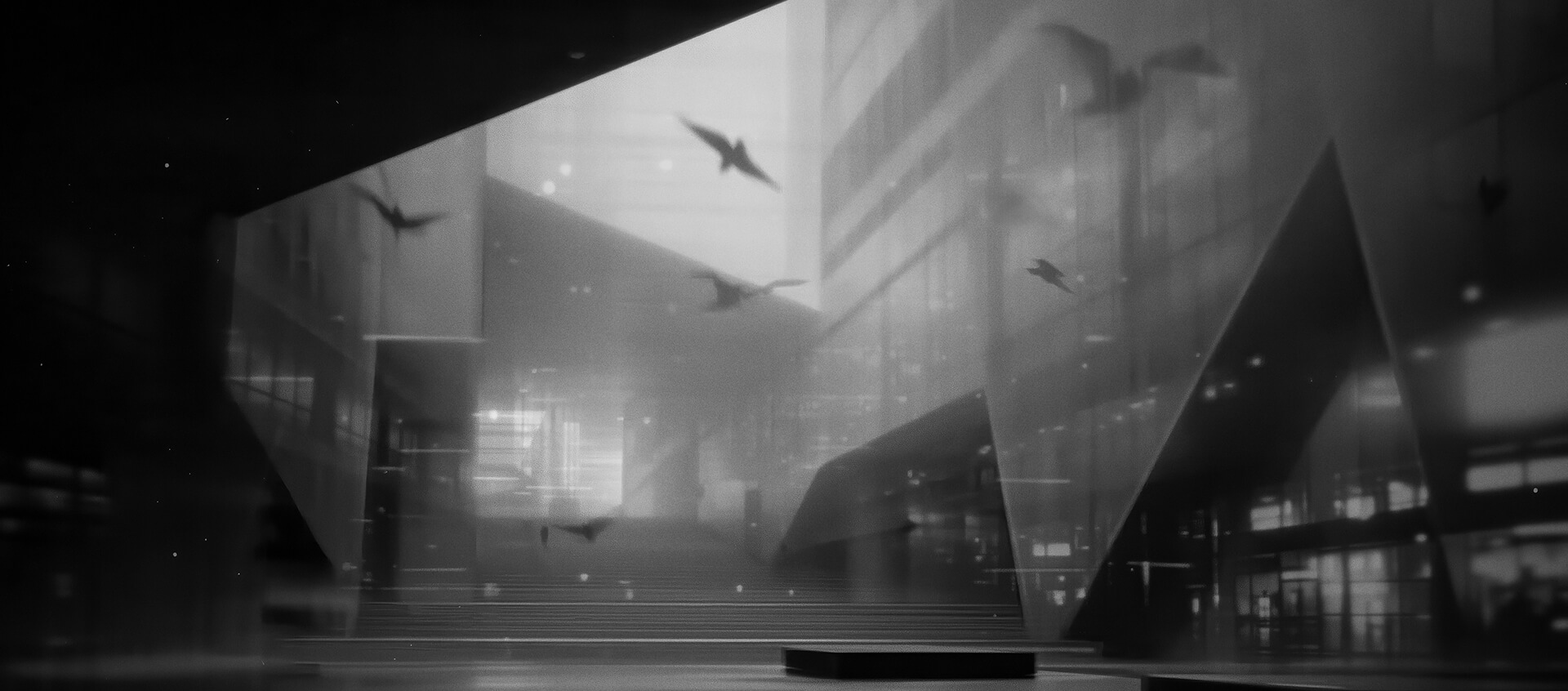
Something happened that the world had never seen before—the global lockdown. From one moment to the next, our civilization held its breath. The proud metropolises suddenly lay still, as if extinct, under a leaden sky. Where life normally pulsed, only echoes resonated through the abandoned canyons of steel and concrete.
Crazy, spooky, scary.
Forsaken Metropolis.
03
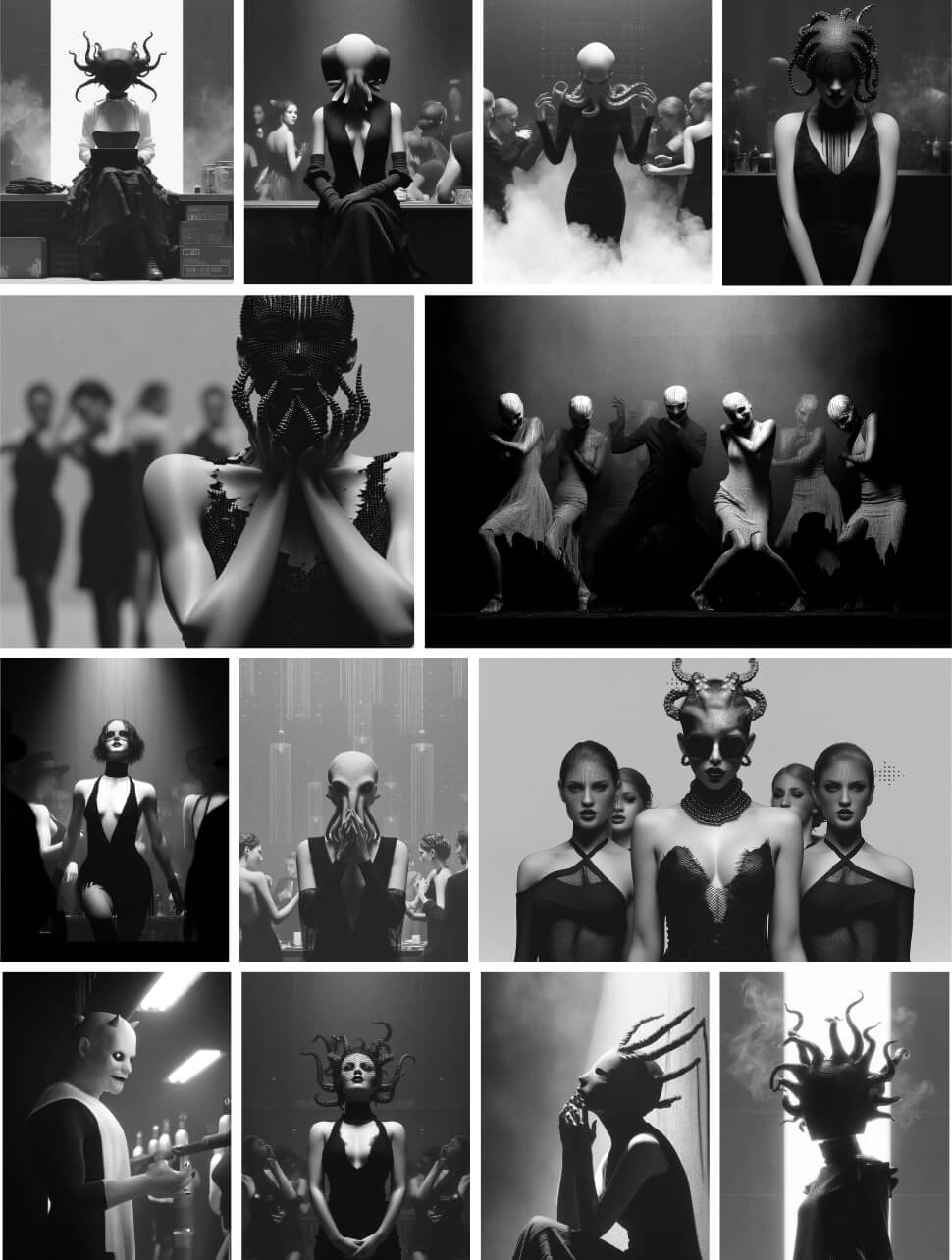
While many found solace in the mask, for me, it extinguished the very core of human connection: facial expression. It transformed every encounter into a meeting with an expressionless "creep," where communication was reduced to nothing but anxious glances.
Deadly Orchid explores this subjective withdrawal—a journey into a digital grotesque. The title references a motif from the 1920s: the orchid as a symbol of artificial, perilous beauty blooming within the decadence of its era. In this series, the metaphor is translated into the present day. The woman becomes the "Deadly Orchid" of the 2020s: flawless in appearance, yet frozen in a masked silence.
Here, the human face—and with it, our shared humanity—is lost. It is an aesthetic of distance, where the eros of a smile has been forced to yield to a sterile facade. Like the hothouse flowers of the Roaring Twenties, these figures appear highly cultivated and elegant, yet their expressions are stifled beneath their masks—beauties no longer permitted to breathe.
Deadly Orchid.
04
Edward S. Herman and Noam Chomsky coined the term in 1988 – in their book Manufacturing Consent: The Political Economy of the Mass Media. The thesis: mass media in capitalist democracies create no open coercion. They manufacture consent. Through selection, repetition, the narrow channel of permitted opinion. The agreement of the population is not broken – it is fabricated.
I had this concept in mind when I worked on this chapter. Not as theory. As memory.
Flatten the curve. Follow the science. The new normal. Zero Covid.
I remember the phrases. They were everywhere. On screens, on posters, in every news format. Always the same. Worldwide. In every language. From a single mouth.
Safe and effective. Andrà tutto bene. Stay home.
The message was not the same – it was identical.
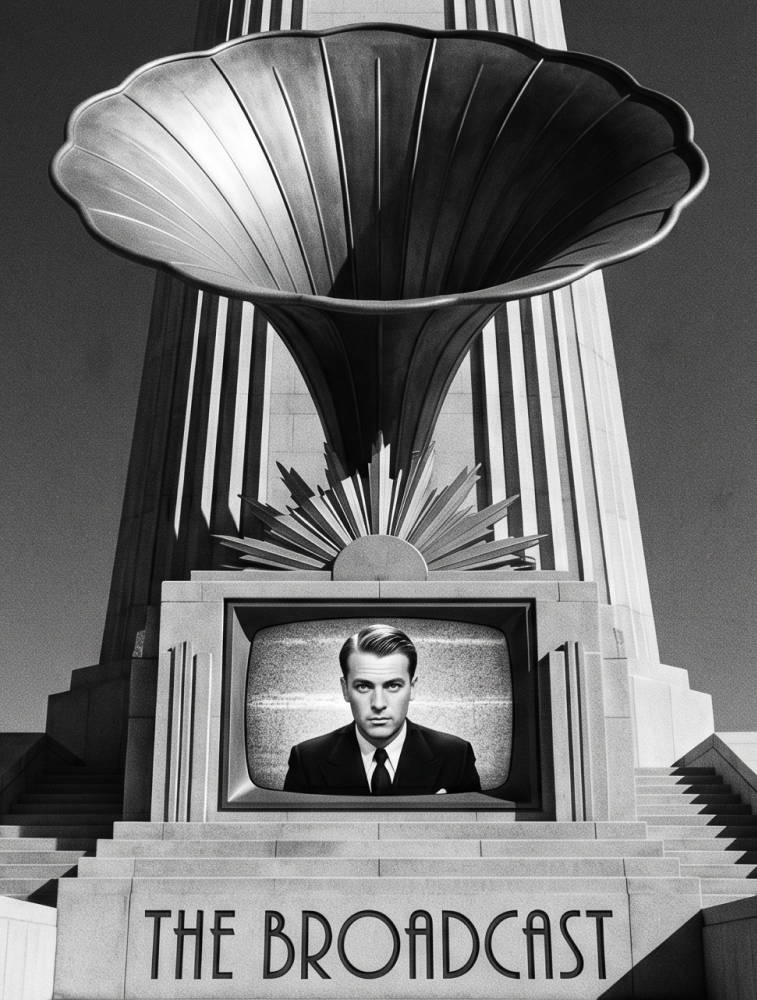
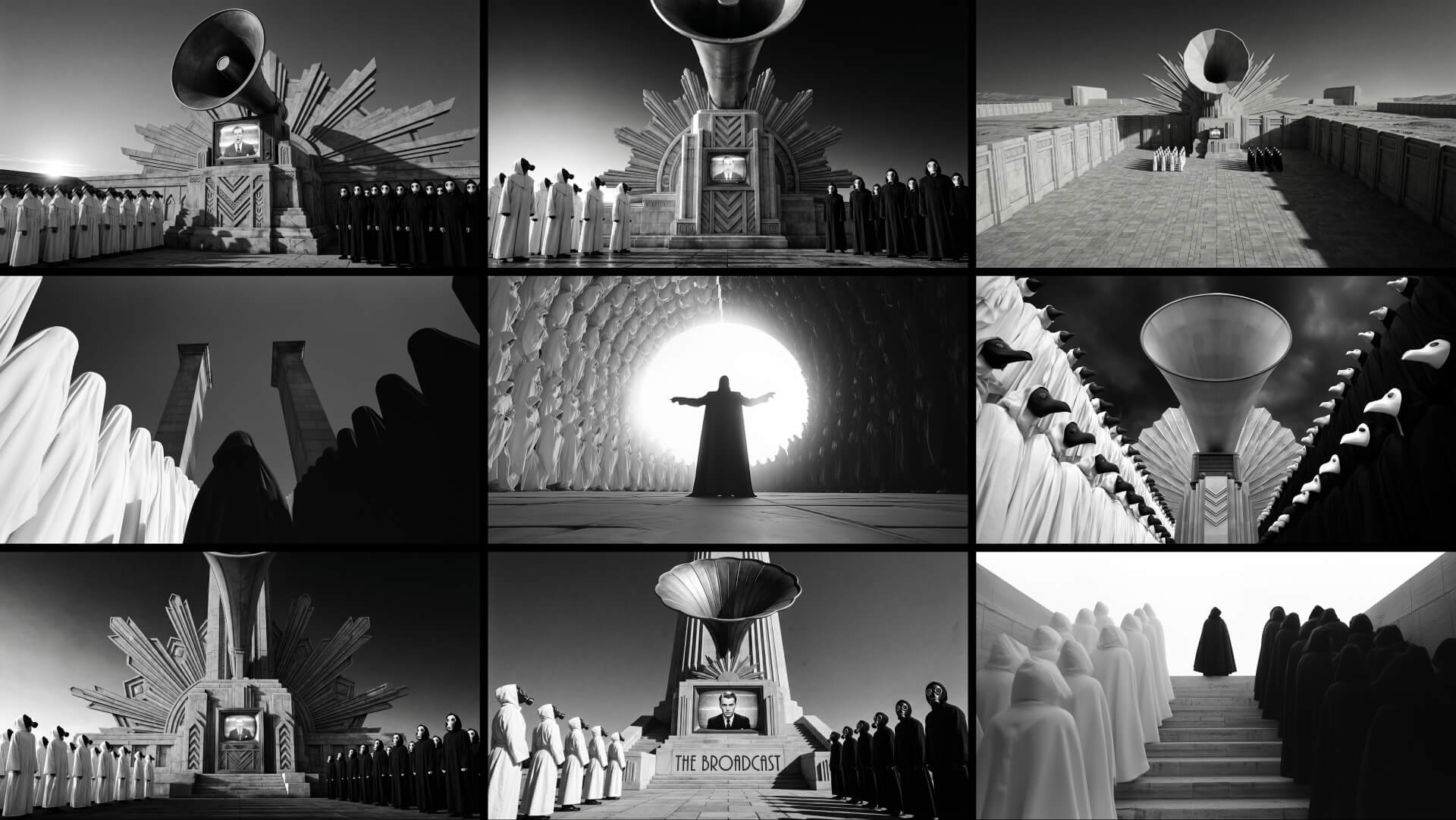
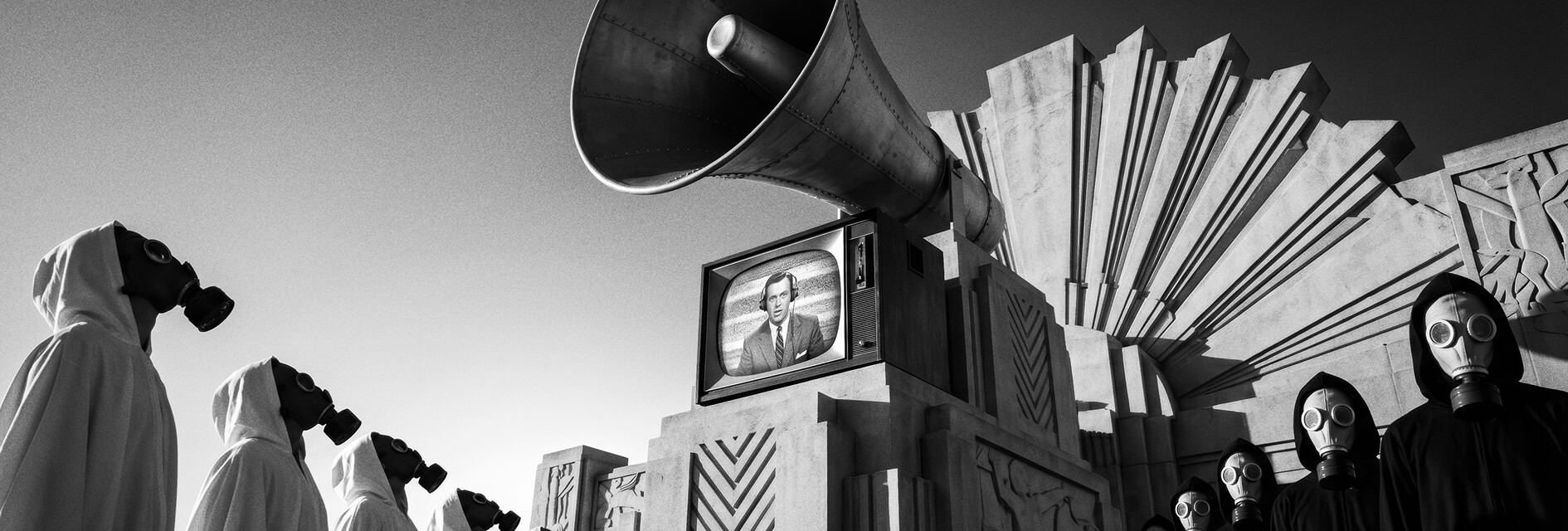
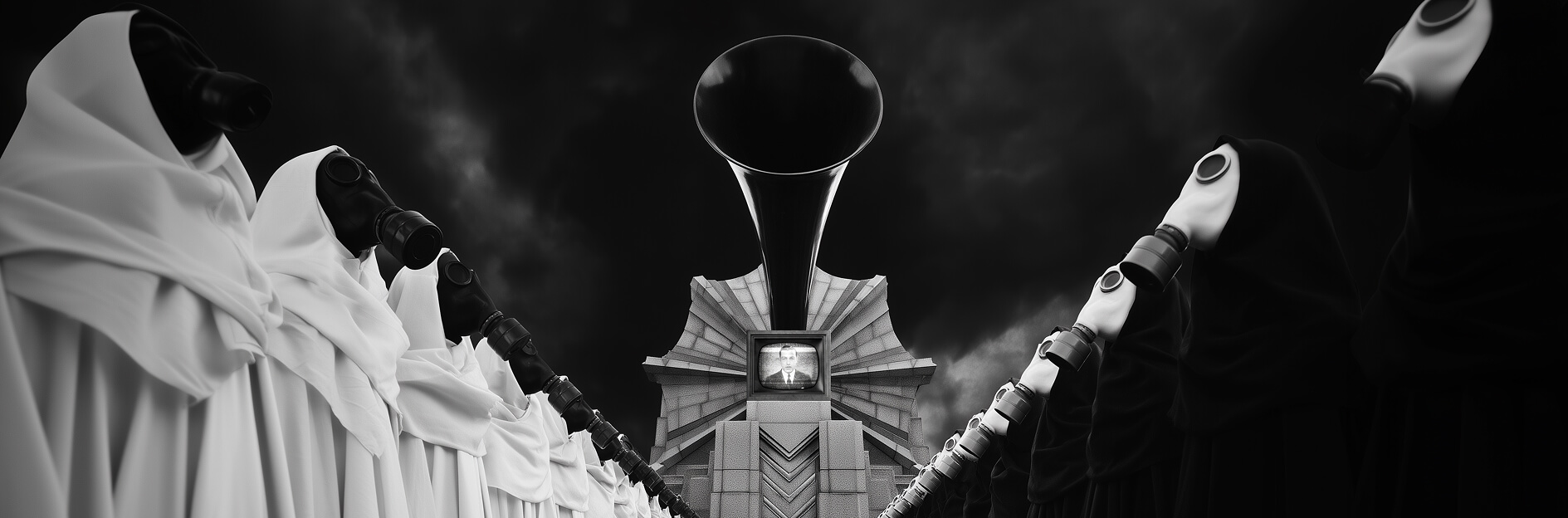
That is the moment this chapter wants to capture: the moment when language stops communicating – and begins conditioning. When information becomes liturgy. When the gramophone mutates into a temple and the gas mask becomes a face.
The images of Manufactured Consent show figures in black and white, in garments that recall ritual. They turn toward an object that transmits – not receives. No dialogue. Only direction.
Whether that is really what happened back then, I leave unanswered. But that is how it felt.
And that feeling is the material from which this series is made.
Manufactured Consent
05
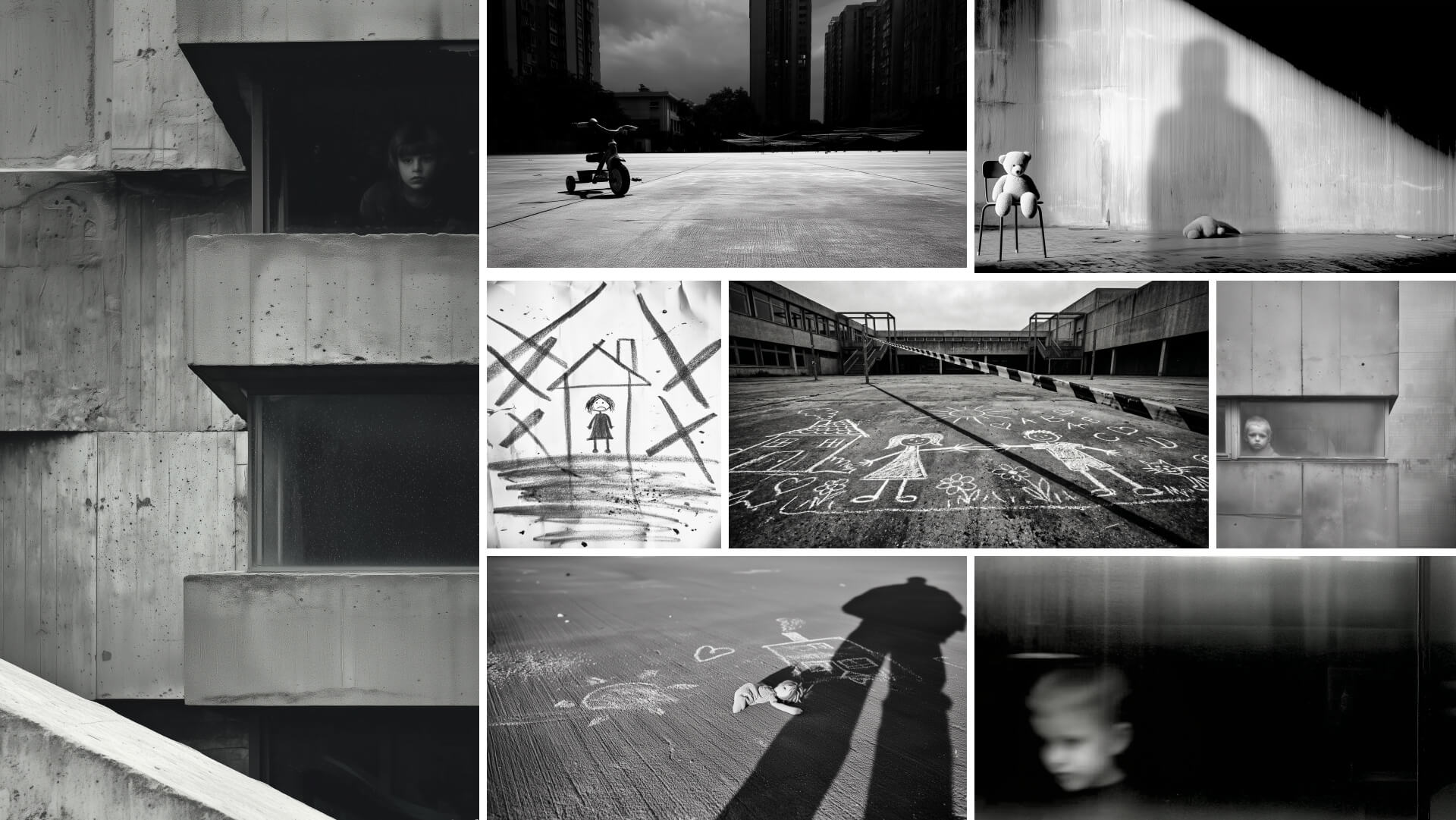
When I think back to 2020 and 2021, one question keeps returning. How brutal must this world have been for our children?
The chapter is called The Burden of Innocence because what happened was not mere deprivation. We loaded our children with guilt — guilt that was never theirs to carry. We didn't just close the playgrounds. We suggested to children that a hug could mean the death of their grandparents, that their breath was dangerous. That their closeness to the people they loved most was the actual threat.
I don't know how a child fully takes that in.
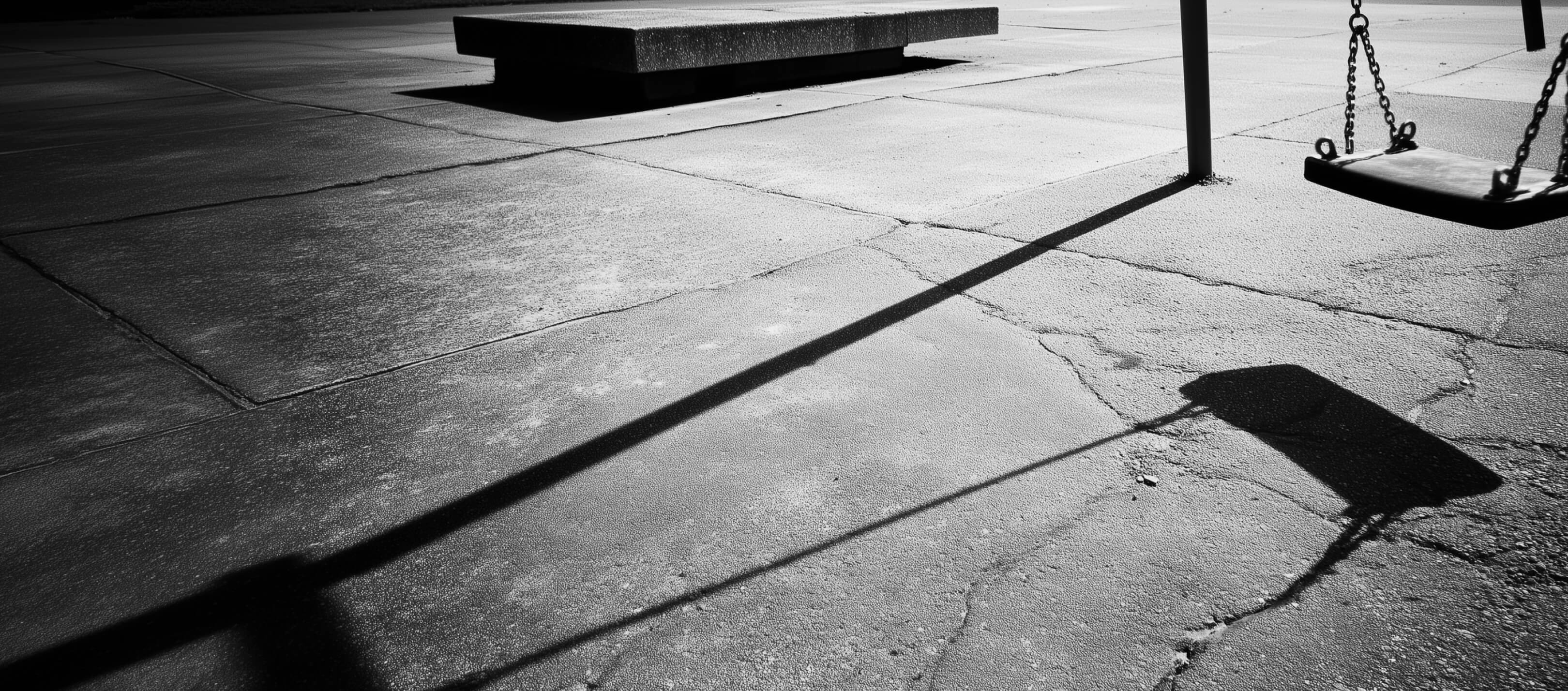
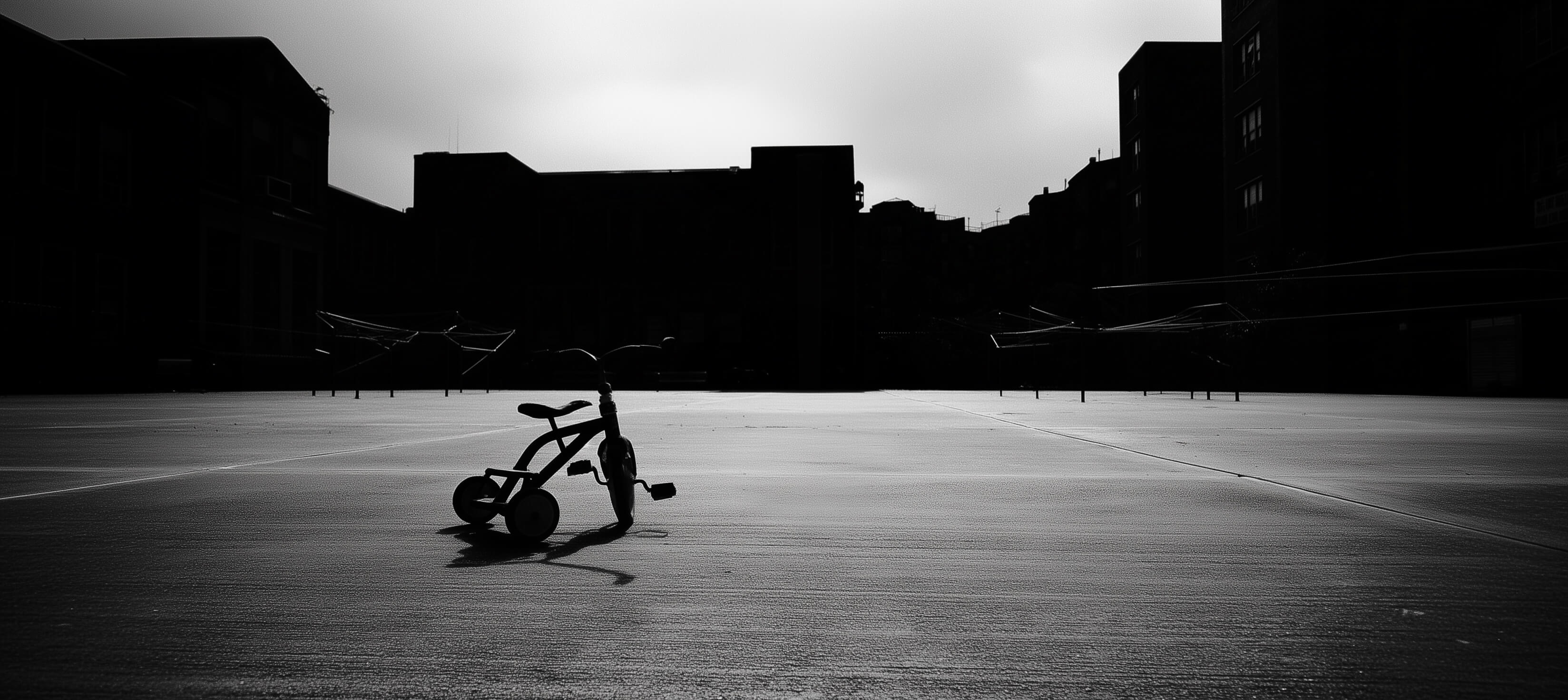
The visual language of this chapter is deliberately minimal. Only objects children left behind, the spaces they were kept from, the shadows of things that should have been in motion. A tricycle, tipped on its side. A swing set at the edge of a Plattenbau courtyard. The silence of a place that should have been filled with noise. The concrete is always there. Heavy. Indifferent. Cold.
This chapter is not a political statement. It is a human one.
What happened to children in 2020 and 2021 was not inevitable. It was a decision — made in fear, made in haste, made without adequate weight given to what it would cost the youngest among us. I don't want that to disappear into the general fog of "difficult times."
What we did to our children, we must not forget.
So that something like this never happens again.
06
2020, then 2021. Something was shifting — not just out there in the world, but in the delicate space between us. Conversations took on a different, harder texture. Families hesitated before embracing. Friendships quietly fractured along invisible fault lines, while new ones formed in the same moment.
At some point, a pair of words surfaced in my memory. Latin. Old. Divide et impera. Divide and rule.
I had first encountered it in a history class — the way most of us do, as a mere footnote to power. The Roman Empire. British colonial policy in India. The strategy is ancient and of a frightening, almost banal simplicity: as long as the people beneath you remain divided, they cannot unite against you. Philip II of Macedon is credited as one of its earliest practitioners. Julius Caesar refined it. Every empire since has relearned it.
What I noticed during this time, however, was not who was doing the dividing. It was the painful recognition that we were being divided.
I noticed it first in my own interior — a slow, almost silent rearrangement of trust. Who was careful enough? Who was careless? Who was asking questions I hadn't yet dared to ask? Who was accepting things I wasn't yet willing to accept? Suddenly you were on one side or the other. The middle became a place you could barely hold. It felt orchestrated.
Because what struck me wasn't any particular decision, any particular headline. It was the rhythm. The way each new development appeared at precisely the moment the effect of the previous one was beginning to fade. The way the language shifted — imperceptibly, but steadily — so that yesterday's reasonable person became almost overnight today's dissident. The way the dividing lines didn't dissolve, but multiplied. Until orientation without choosing a side seemed impossible.
Divide et impera. The principle requires no identifiable author to function smoothly.
What it leaves behind, I am still trying to understand. A reverberation. This lingering, uncomfortable knowledge of having seen how easily a society can be moved and steered — not through brute force, but through the subtle, administrative management of whom one is still permitted to trust. That is not something you simply set back down.
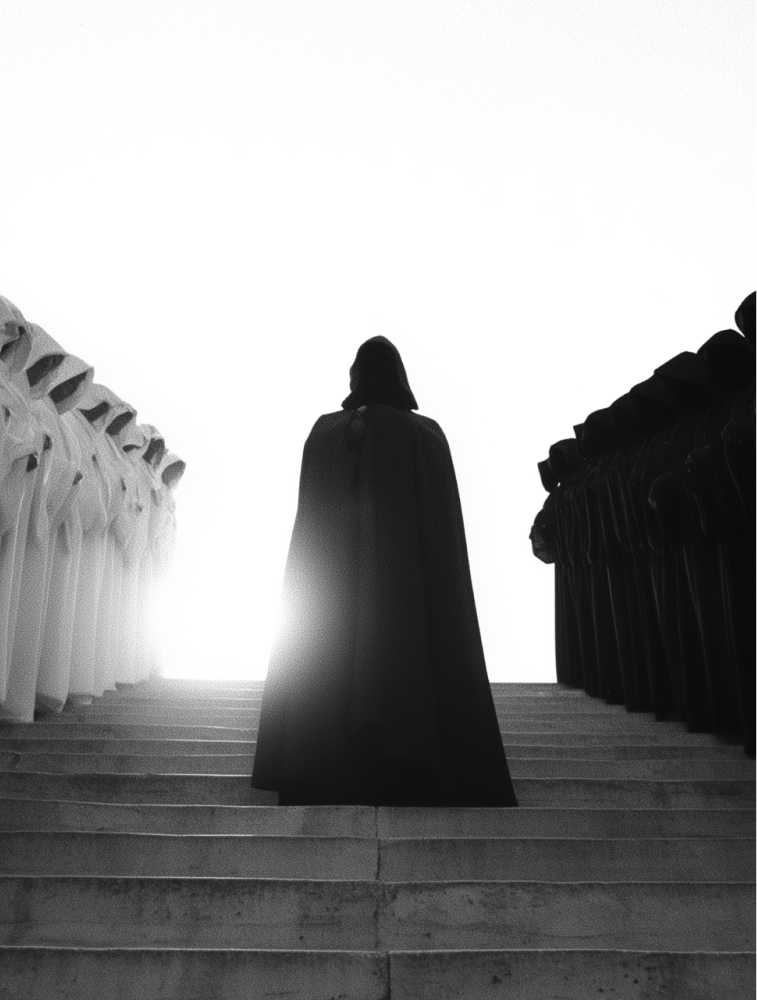
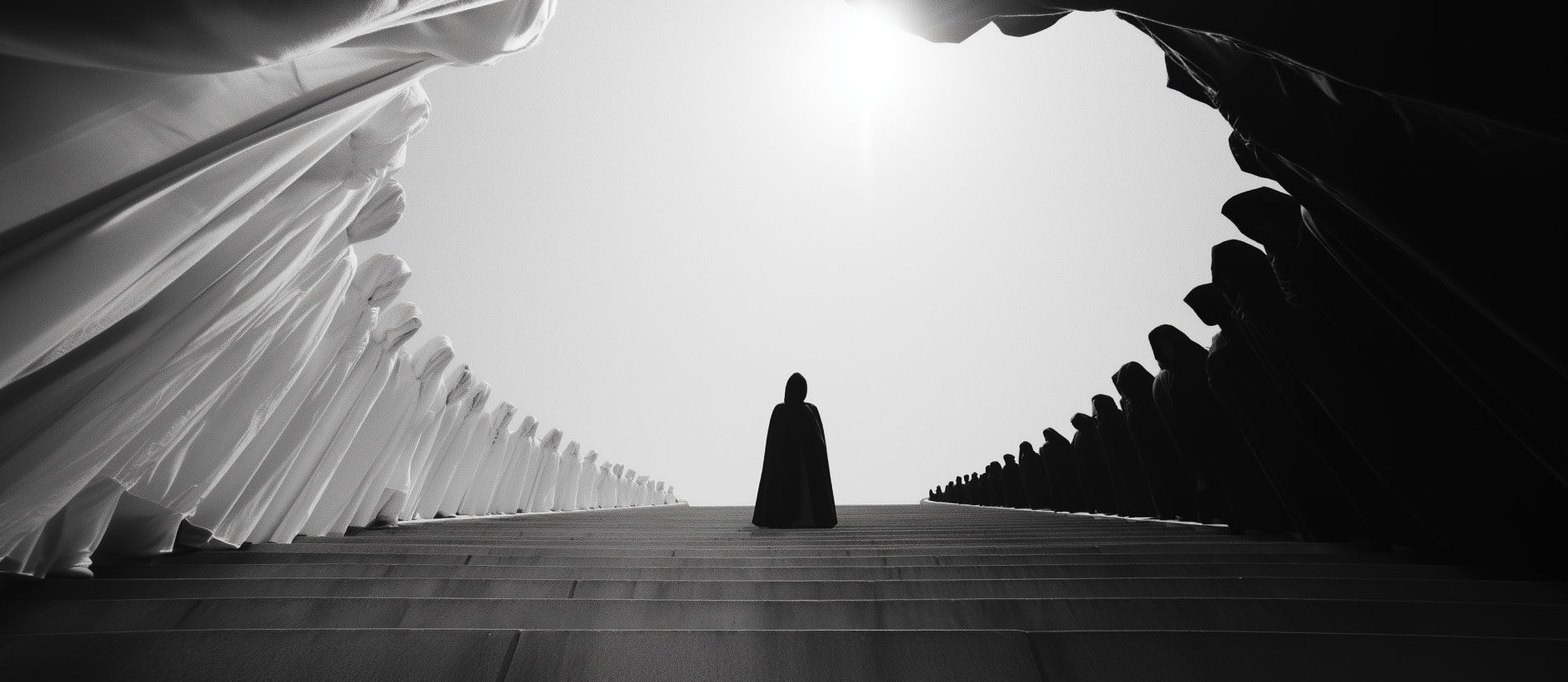
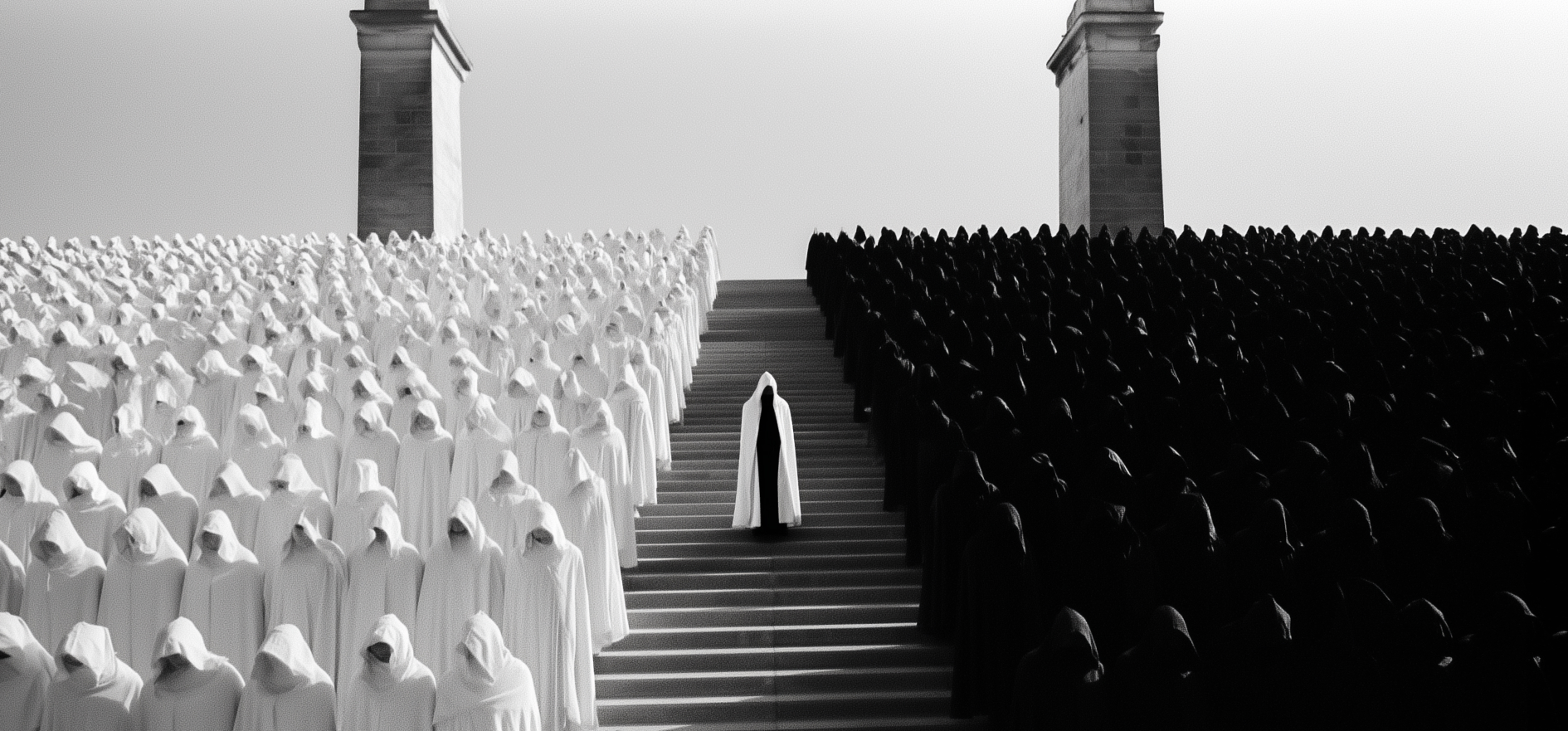
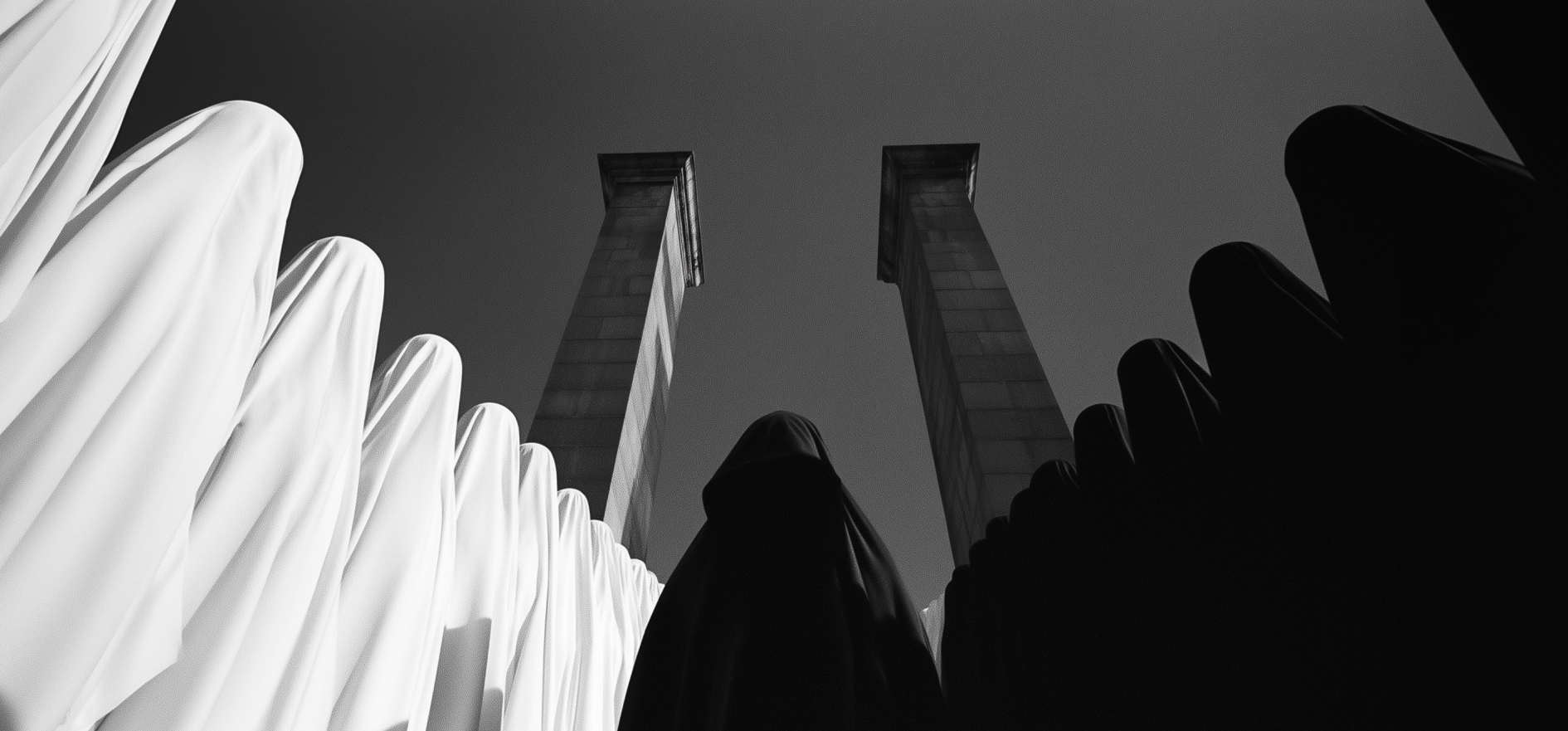
The images of my work Divide et Impera come from precisely this reverberation. Two masses. White on the left, black on the right. Every figure hooded, cloaked, faceless — no individuals anymore, only the colour of their camp. And between them, on the staircase, a single figure. The masses do not move; they stand irreconcilably opposed. That was the defining feeling of those days: not quiet distance, but open hostility. There was no longer any willingness to move toward one another. It remained mercilessly black and white. Any mixing had become impossible. Only the complete, sterile sorting remained.
The series doesn't judge those who ended up on one side of the line or the other. I ended up somewhere too. We all did.
The question that remains at the end is far more elemental than any politics. It is this: how quickly did it happen? And how frighteningly little was needed?