
Dirk Habenschaden and ChatGPT, Oct 7, 2025
Immersive Art
What Is Immersive Art?
Immersive art aims to transcend the traditional role of the viewer: the visitor becomes not just an observer but an active participant — spatially, visually, acoustically, and sometimes even interactively. Typical tools include large-scale projections, light installations, sound environments, virtual or augmented reality (VR/AR), sensors, and interactive control systems. The goal is to blur the boundaries between subject and space and to create a holistic, sensory experience in which the viewer becomes part of the artwork itself.
Where Do Its Historical Roots Lie — and How Has Immersive Art Evolved?
Precursors up to the Mid-20th Century
Long before the digital era, artists experimented with spatial concepts in which the environment itself became part of the artistic experience — for example, panoramic installations or immersive theater productions. The exhibition Immersion. The Origins: 1949–1969 documents early works in which entire gallery spaces were deliberately designed as immersive environments, often through the use of light, spatial interventions, and large-scale objects.
Late 20th / Early 21st Century: Physical Installations
Artists such as Olafur Eliasson, with The Weather Project (2003, Tate Modern), created expansive environments of light, fog, mirrors, and artificial sunlight — attracting enormous audiences. Mike Nelson’s The Deliverance and the Patience (a labyrinth-like installation) offers non-linear pathways, surprises, and an atmosphere of high sensory intensity — guided more by strategy than by narrative. Antony Gormley (e.g., Blind Light) also belongs to this movement that strongly emphasized the immersive potential of space.
Digital / Media Expansion & Exhibition Boom (from around 2010 to today)
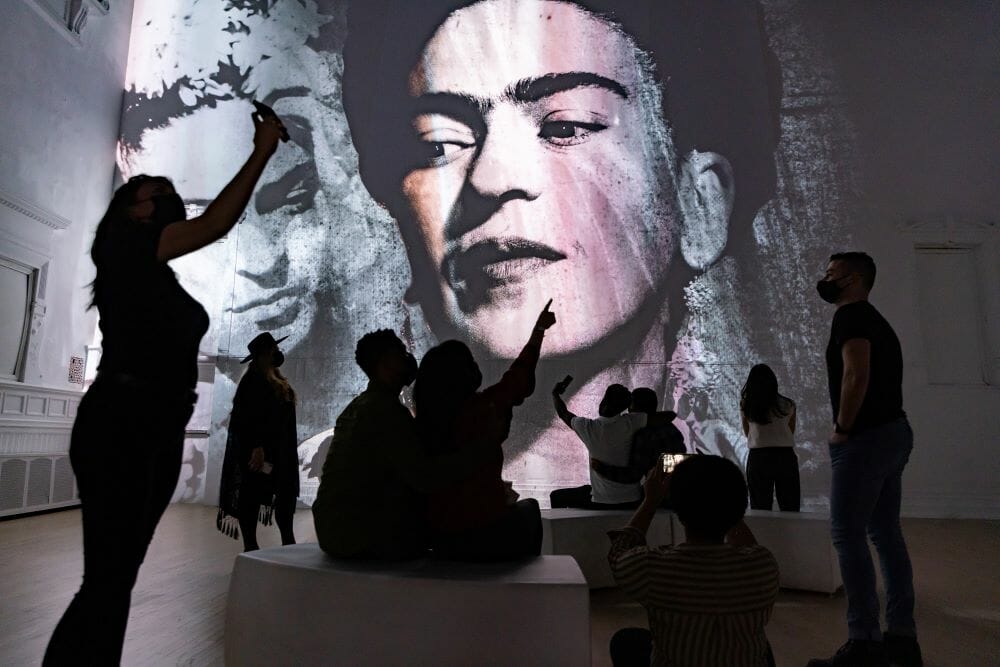
With advances in projection technology, digital systems, VR/AR, LED screens, and sensor technologies, immersive experiences have become far easier to realize. Large-scale multimedia exhibitions of well-known artists have turned into mass events — for example Immersive Van Gogh or Frida: Immersive Dream..
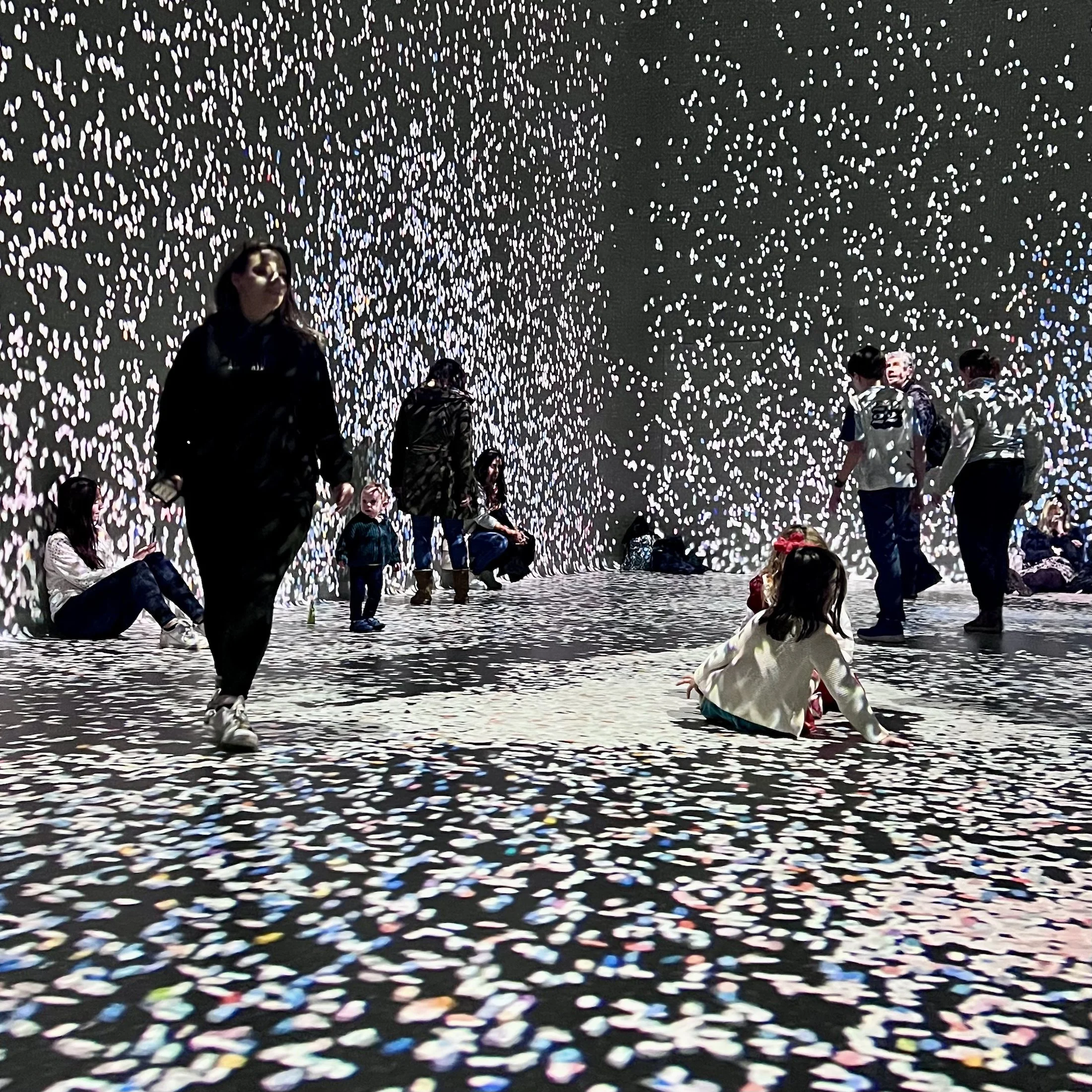
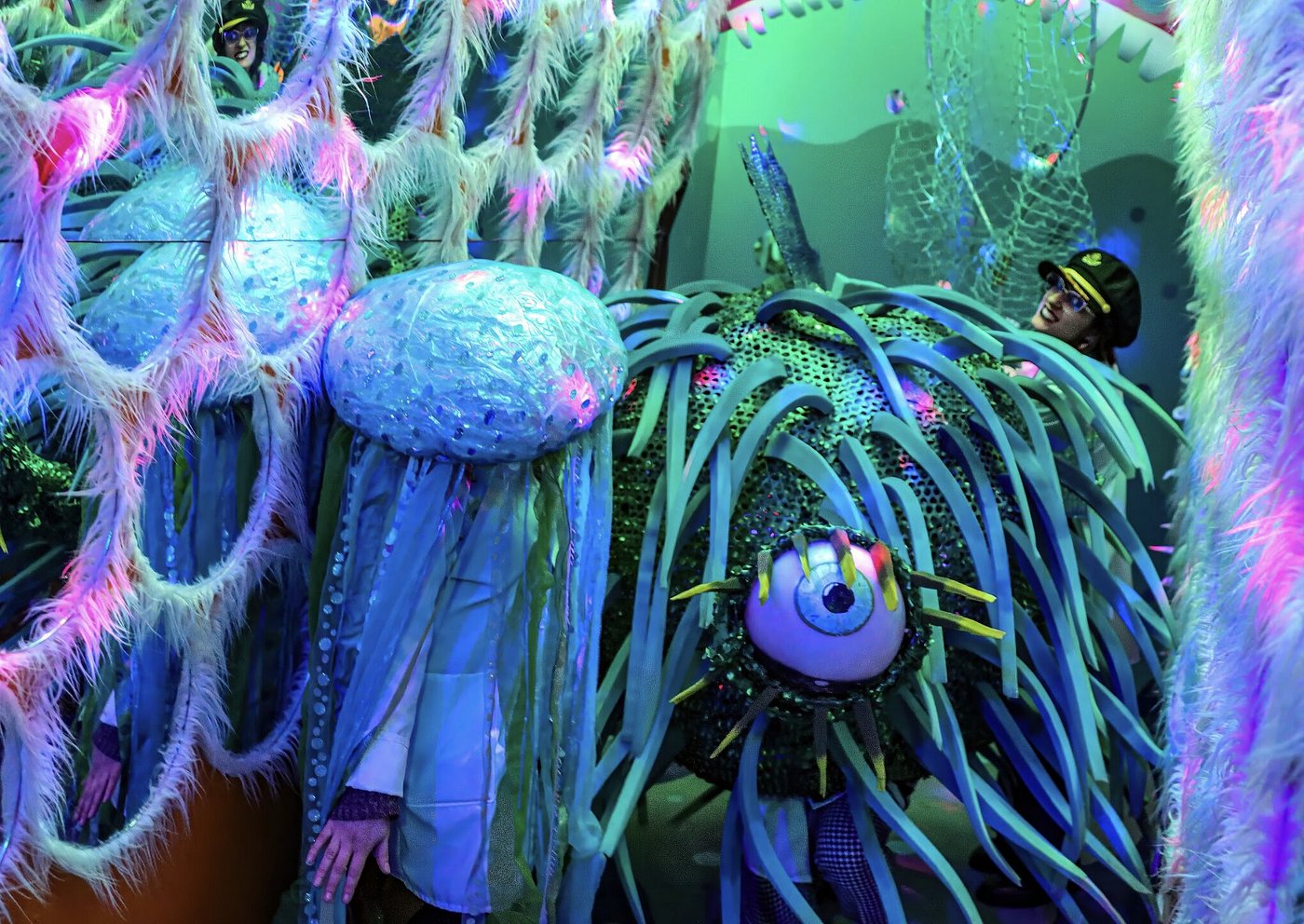
Institutions like FRAMELSS (London) operate permanent multisensory exhibition spaces where classic artworks are “retold” in immersive formats. In New York, Hall des Lumières opened as a digital art center featuring immersive exhibitions (e.g., Klimt, Chagall). Artists such as Refik Anadol combine data, AI, and immersive environments; he is also planning “Dataland,” a dedicated museum for AI art. A more recent example is Fathom (2024) in Portland — an ocean-themed installation with interactive light, sound, and motion elements that allow visitors to become co-participants in the environment.
What Are the Current Trends and Challenges?
Trends
In recent years, immersive art has evolved from an experimental niche into a global phenomenon. Increasing numbers of museums, galleries, and commercial producers are turning to large-scale, multisensory installations that invite visitors not just to view art but to experience it. These formats have become major audience magnets — spaces where art, technology, and experiential design merge.
At the same time, the boundaries between exhibition, entertainment, and marketing are becoming increasingly blurred. What was once conceived as a contemplative art space is now often staged as an experiential environment: immersive art becomes a spectacle, relying on visual impact and emotional overwhelm. Artistic institutions and commercial platforms are converging; many venues use immersive media intentionally to attract new audiences and increase visitor numbers.
Parallel to this, technological innovation continues to push the field forward. Artificial intelligence, robotics, and autonomous systems expand the possibilities of immersive installations — reacting to movement, sound, or data streams, transforming in real time, and creating experiences that oscillate between digital choreography and living sculpture. The future of immersive art lies at the intersection of artistic vision, algorithmic logic, and sensory experience.
Challenges & Criticism
Consumption vs. reflection: When immersion focuses too heavily on spectacle and aesthetics, depth and critical engagement can be lost.
Commercialization and accessibility: Tickets, technical infrastructure, and specialized locations are expensive; not everyone can access these experiences.
Ephemerality & preservation: Hardware ages, software becomes obsolete — long-term conservation of immersive artworks is complex.
The line between art and attraction: Some immersive shows are perceived more as entertainment spectacles than as “genuine” art.