


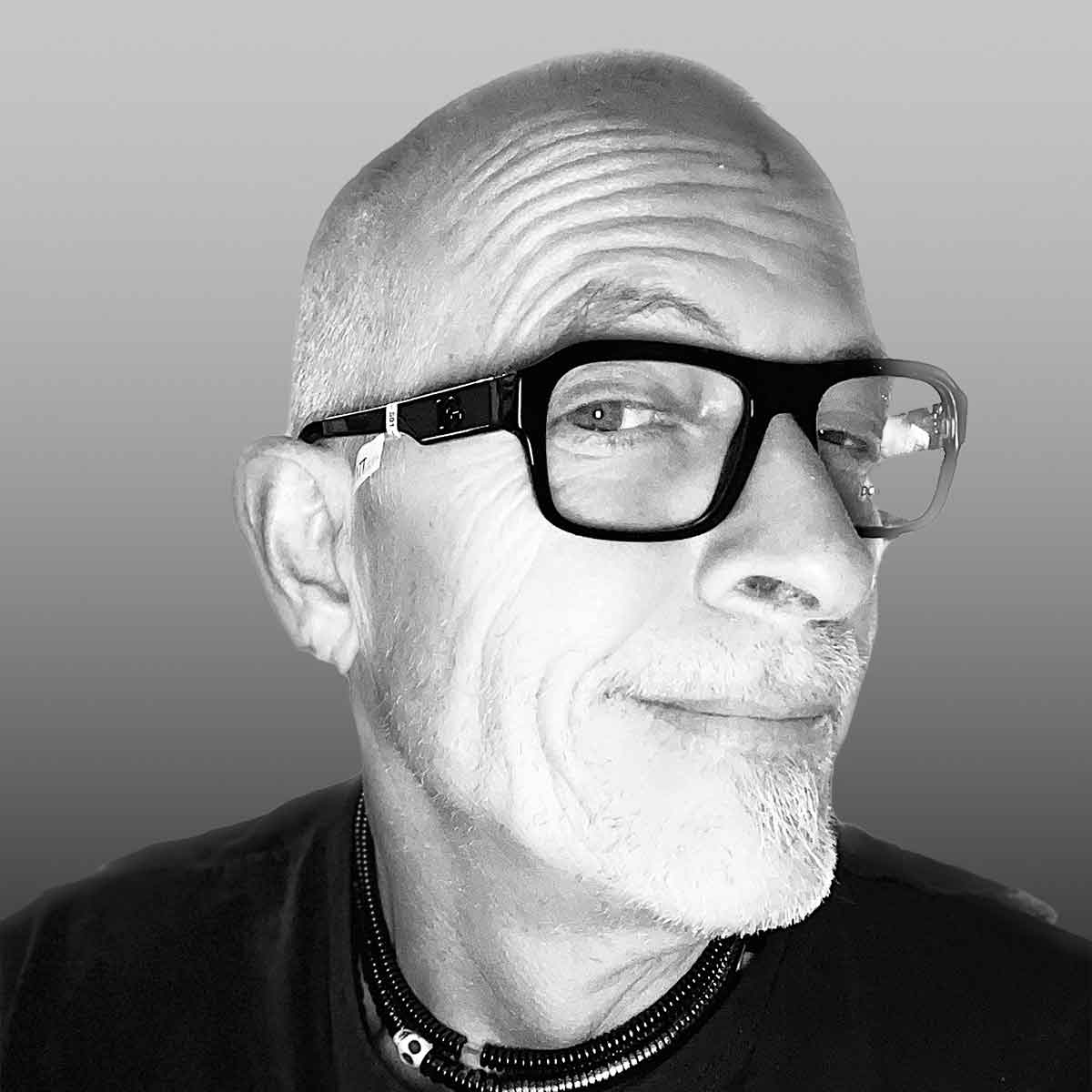
Dirk Habenschaden / ChatGPT, Dec 2025
Between Reality, Sign, and Artificial Presence
In a world increasingly shaped by digital media and artificial intelligence, the question of reality is being reframed. Where does the real end, and where does simulation begin? French philosopher Jean Baudrillard offered a theoretical model to describe this shift in his seminal work Simulacra and Simulation (1981). His central thesis: we live in an era in which signs have gradually detached from any concrete referent and now circulate autonomously. The result is a state of hyperreality—a world in which simulations not only replace the real, but overlay it, even appearing more real than reality itself.
Baudrillard identifies four stages of the simulacrum. In the first stage, the sign is a faithful copy of a real referent. In the second stage, distortion begins: the image becomes a “perverted” copy that distorts or masks reality. The third stage describes signs that claim to refer to a reality that no longer exists—copies without an original. In the fourth and final stage, there is no longer any reference to reality at all: the sign refers only to other signs. It becomes pure simulation. The transition into hyperreality is complete.
The simulacrum is true.
Stages 3 and 4 describe a condition in which imagination and reality become indistinguishable. Especially the fourth stage, according to Baudrillard, leads us into hyperreality. In this state, the difference between reality and representation dissolves entirely. Signs no longer refer to an external world but only to themselves—or to other signs in an endless loop. This is not mere illusion—for illusion would imply a hidden, authentic reality—but a manufactured reality, “more real than the real,” in which simulation produces reality itself. Baudrillard illustrates this with the famous example of Disneyland: a fabricated amusement park that openly presents itself as fiction in order to mask the fact that the supposedly “real” world outside has already entirely drifted into the artificial and simulated.
In hyperreality, according to Baudrillard, there is no longer any difference between the real and its double. He therefore provocatively declares: “the simulacrum is true.” It possesses truth not in the sense of correspondence with external reality, but solely as coherence within a closed system of signs. In doing so, Baudrillard fundamentally challenges traditional notions of truth and reality.
Reception in Visual and Digital Art: Simulation and Hyperreality as Artistic Themes
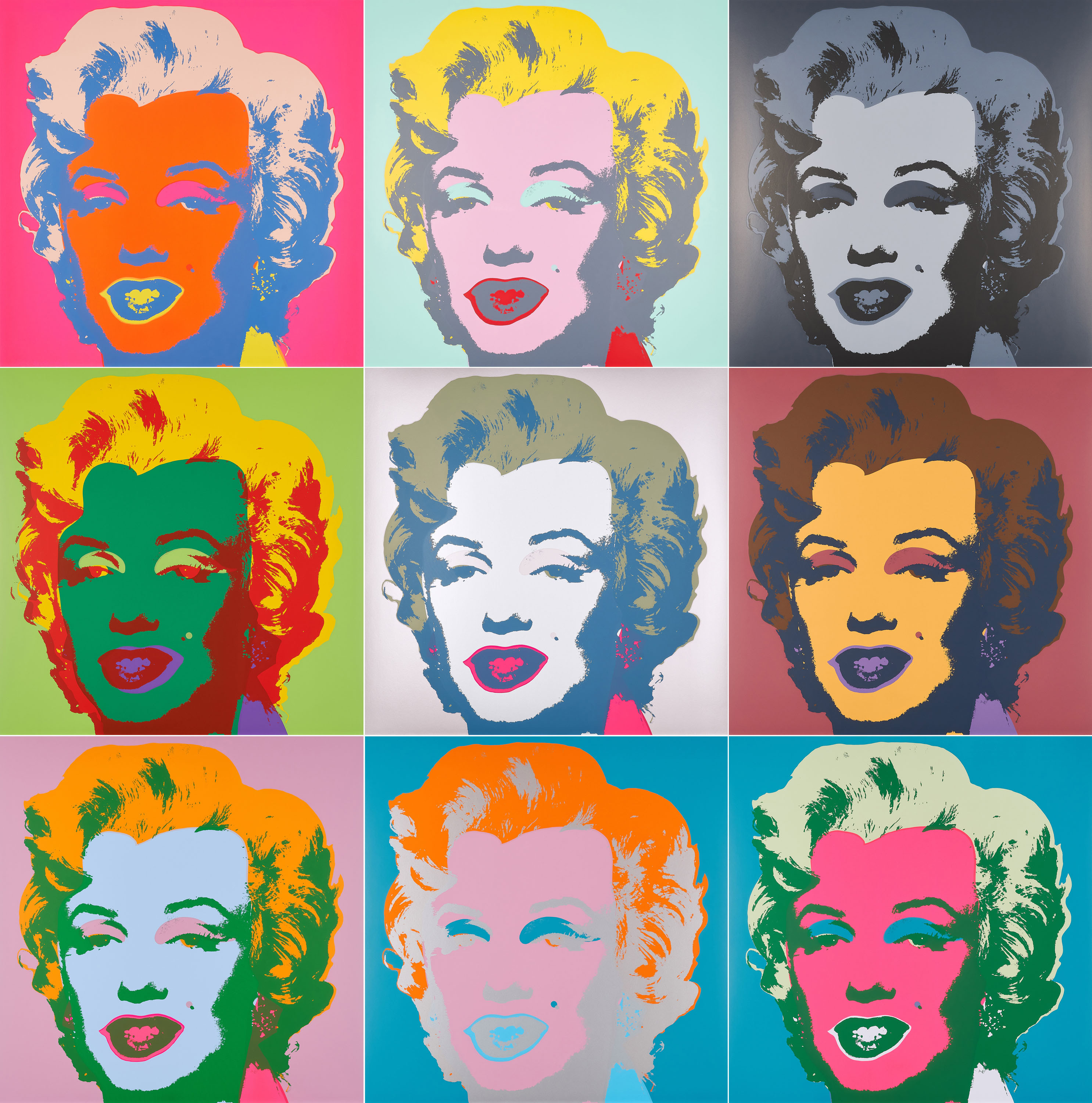
Baudrillard’s diagnosis of a world permeated by simulation found strong resonance in visual art and media theory. As early as the 1960s and ’70s, Pop Art and Photorealism were already playing with the relationship between image and reality. Baudrillard was particularly fascinated by the aesthetics of hyperrealism in art—and considered Andy Warhol a prime example of art shaped by hyperreality. Warhol’s serial silkscreens (such as his endlessly repeated portrait of Marilyn Monroe) illustrate how mass media produce images that replace the real: the icon becomes more important than the real person; the image becomes the celebrity. Baudrillard remarked that Warhol still seemed to him “the best in the field of hyperrealism.” In this work, the omnipresence of the sign—the endless circulation of media images—becomes the very subject of the art.
In contemporary media art, the play between simulation and reality becomes even more explicit. We live in an age of visual oversaturation, where countless media images shape our experience—reality risks disappearing “in the fog of images and signs.” Many artists respond by making artificial realities tangible or by thematizing the loss of the real.
One particularly striking field is digital and generative art. AI-generated images, for instance, produce visual works with no direct origin in physical reality. Tools like Midjourney generate portraits and scenarios from data patterns—“creations without referents” that no longer correspond to any actually existing object. These images embody Baudrillard’s fourth stage of the simulacrum in its purest form: a simulated aesthetic based solely on previous images, not on direct experience. It has been pointed out, for example, that an AI-generated portrait of a non-existent person is neither reproduction nor forgery, but entirely new—a pure simulacrum. The “truth” of such works lies only in their aesthetic effect and internal coherence within the visual system—not in their resemblance to a real-world model. When an AI-generated artwork wins a prize or is shared millions of times, this happens due to its effectiveness as a sign—not because it depicts something real. Here, Baudrillard’s hyperreality becomes tangible: a simulated creation can seem more real than reality, as it fully occupies our perception and renders the question of an original obsolete.
The icon becomes more important than the real person.
Immersive installation art also draws on the concept of the simulacrum. In elaborate VR and AR environments, viewers are transported into entirely artificial settings. The boundary between physical space and projected virtual scenarios dissolves—one experiences a space made entirely of projection or data, yet perceives it with the senses as real. One example is sound and media installations in which original and reproduction become indistinguishable. One exhibition reported on a sound-art environment in which recorded sounds and live noises blended so seamlessly that the copy seemed to surpass the original and the distinction between them was erased—a deliberately constructed state of hyperreality within the art context. The reproduced sound became the primary experience, leaving the audience unsure whether they were hearing something “real” or a simulation. Such experiments vividly illustrate what Baudrillard described theoretically: a sign sufficient unto itself can dominate our experience of reality.
Similar phenomena appear in performative formats—for example, when artists appear in virtual form as avatars or when holograms of deceased musicians “perform live” on stage. The stage becomes a space of simulation in which presence is feigned—a play on authenticity that deliberately unsettles the audience. In contemporary performance art and theater, digital media are used to create parallel realities or simulate identities (as in productions staged in online environments). In these cases, simulation often functions as a critical artistic strategy to demonstrate how much of today’s reality has itself become a performance of simulation.
In summary, Baudrillard’s concept of the simulacrum is reflected in contemporary art in two fundamental ways: first, as a theme—artists explore seduction and deception through images in our media-saturated culture; and second, as a method—by using new technologies to create artificially constructed realities. In particular, digital art, with its immersive environments and AI-generated imagery, has directly embraced Baudrillard’s ideas of simulation and hyperreality and translated them into sensual, perceptible experiences.