


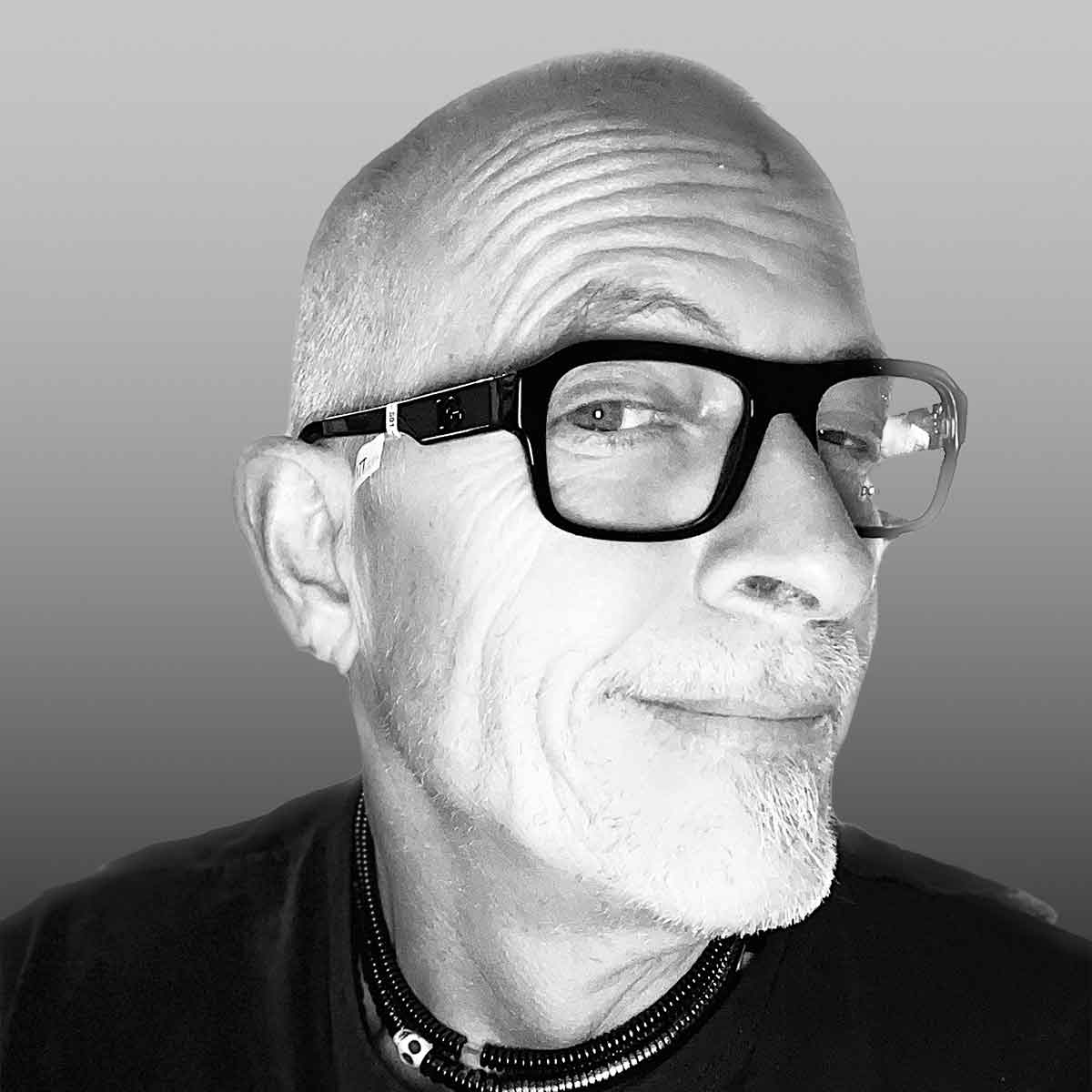
Dirk Habenschaden and ChatGPT, Nov 2025
A mild summer evening in Berlin. In a small gallery, visitors crowd in front of an image that could have come straight out of a dream. But instead of oil on canvas, an algorithm is at work. Where Salvador Dalí once melted clocks, artificial intelligence now hallucinates desert landscapes with liquefied timepieces and floating fish—generated within seconds by a line of text. Scenes that used to live only in the imagination now populate screens at breathtaking speed. AI image generators like Midjourney and DALL·E have unleashed a flood of fantastical visual worlds. No longer confined to meme culture or digital novelties, these tools are being embraced by renowned artists and curators alike. The art market has taken notice. In fact, the industry is witnessing a renaissance of surrealism—of both the historical movement and its methods. A prime indicator: the 59th Venice Biennale in 2022. Titled “The Milk of Dreams,” curator Cecilia Alemani showcased a full spectrum of art beyond rational boundaries. Even the numbers reflect the trend. The Art Industry Trends Report 2023 listed “Contemporary Surrealism” as one of the top-performing categories in gallery sales.
This new wave of surreal imagery has a new origin: the machinic unconscious. Since Freud’s psychological revolution, we’ve known that beneath our conscious mind lie entire worlds of repressed wishes, dreams, and fears. Over a century ago, André Breton and the surrealists began channeling this inner realm through automatism, collage, and dream images. Today, in an increasingly digitized present, we ask: have the machines that learn from us developed an unconscious of their own? After all, AI image generators are trained on millions of human images and texts—a collective dream of data in which our visual traditions are mirrored. No surprise, then, that the results often feel dreamlike, even eerily familiar.
Neural networks dream, err, hallucinate—based on the archives of our culture.
The visions they produce are as cryptic as the paintings of Max Ernst—only now an algorithm directs the composition.
What matters now is how artists use these new tools. Some creatives do employ DALL·E and similar systems to rapidly replicate established styles. But the most compelling positions break away from predictable digital aesthetics. A case in point: Düsseldorf-based duo Hedda Roman. They have no interest in polished AI imagery. In their current show “Test Time” in Bielefeld, they explore how uncertainty, noise, and fragmentation become their own visual language. Hedda Roman work with generative AI, combining the sampling strategies of historical surrealism with neural networks. Where others use AI as a gimmick, they allow the system to dream and hallucinate—embracing randomness and loss of control as a principle. Their aesthetic refuses smoothness: instead of glossy perfection, they present porosity, digital decay, and glitch. Similar impulses are found worldwide. British artist Jake Elwes, in “Zizi – Queering the Dataset,” has a facial recognition system morph hundreds of drag portraits into a joyous freakshow of faces “too weird to be physiologically possible”—a queer remix of the cadavre exquis. German AI pioneer Mario Klingemann generates uncanny portraits from neural noise. And in New York, Refik Anadol’s immersive installation “Unsupervised” plunged viewers into pulsating data-dreams—as if machines were projecting their own visions.
No surprise that Anadol insists: “Machines can dream. And hallucinate.”
Institutions are shaping this evolution. The Max Ernst Museum in Brühl, in its 2023/24 exhibition “Surreal Futures,” explored the ties between historic surrealism and high-tech art. The show opened with a resurrection of the cadavres exquis—those “exquisite corpses” once drawn collectively by the surrealists—now reimagined as a symbol of generative collaboration. Meanwhile, the ZKM Karlsruhe launched “AI on the Couch”, inviting surrealist questions for the machinic unconscious. Workshops blended automatic writing with AI text generation, and panels discussed dreams—both human and computational—as if Freud had been invited to analyze the servers. Major art events have also embraced the trend. At the Venice Biennale, Documenta, and in galleries from New York to Berlin, AI-generated works are no longer fringe experiments. They are serious contributions to contemporary art.
But with the enthusiasm come frictions and debates. Purists see artificial creativity as a threat—“highly evolved plagiarism,” some say, that undermines genuine artistic labor. Tech optimists, by contrast, celebrate AI as a democratizing force: anyone can be an artist now; barriers fall; new forms emerge. In between lies legal turbulence: who owns a machine-generated image when the training data belongs to everyone—and no one? At the same time, many artists already embrace AI as a sparring partner—a co-author whose responses are not entirely controllable, expanding imagination rather than replacing it. The art market sways between excitement and uncertainty. On one hand, AI opens endless possibilities that spark collector curiosity—witness the NFT boom, where AI images quickly became sought-after assets. On the other, a flood of generic content threatens to dilute the distinctiveness of individual works. And above all looms a fundamental question: Why privilege human authorship at all? Shouldn’t art be judged on its aesthetic merit—regardless of whether it was made by a person or a machine? That post-humanist view may feel radical, but it reveals just how deep the shift runs.
In this light, the AI-driven return of surrealist imagery marks a remarkable transition. A century after Breton, the art world once again seeks access to the unconscious—but now through datasets and distributed computation rather than dreams alone. The results are sometimes familiar, sometimes disconcerting, often beautifully bizarre.
While some still argue over authorship, others watch—fascinated—as the machines begin to dream.